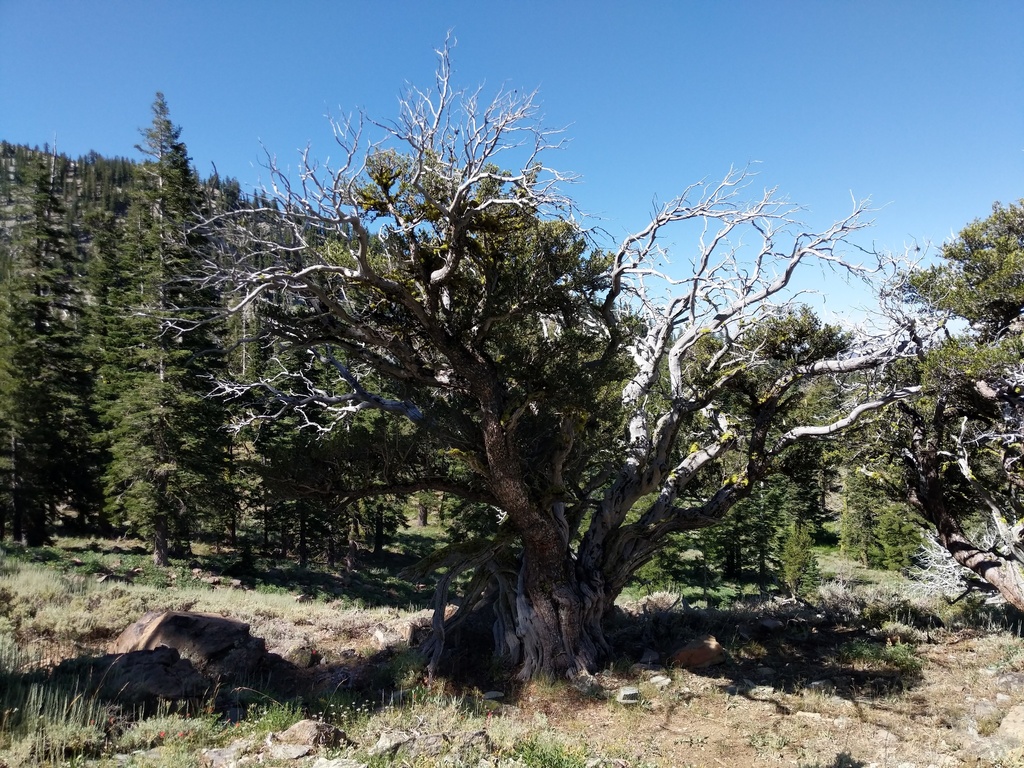
Cercocarpus ledifolius
- Origin
- North America
- Part used
- See detailed notebook
- Tradition
- Traditional ethnobotany
Cercocarpus ledifolius, or "mountain mahogany," is a gnarled, slow-growing shrub of the arid highlands of North America. The Indigenous peoples of the Great Basin and the Rockies had long recognized its dyeing, restorative, and practical properties, and its remarkably hard wood also earned it its reputation. Oral tradition made it a quiet companion of everyday uses rather than a leading plant in herbalism.
Traditional uses
Traditional wound care
The inner bark, made into a poultice or a decoction, was traditionally applied to wounds and skin conditions by certain Indigenous peoples of mountainous regions.
A traditional plant dye
The bark and wood, rich in tannins, were used to produce reddish to brown dyes for fibers, hides, and various woven objects.
An occasional reported internal use
A light bark decoction was reportedly used occasionally for certain digestive complaints, according to scattered and sparsely detailed ethnobotanical accounts.
Traditional fumigation and vapors
The fragrant wood was sometimes burned for its smoke, used in traditional practices tied to respiratory ailments or ritual purposes.
Before you use it
Internal use is poorly documented scientifically: caution calls for consulting a health professional before any intake, particularly for decoctions. The plant contains cyanogenic compounds (like other members of the rose family), which discourages any substantial or prolonged ingestion. Avoid in pregnant or breastfeeding women, as well as children, for lack of sufficient safety data. Do not confuse the traditional uses reported here with a validated therapeutic use; this content is purely historical and informational.
The detailed notebook
- Prepared as a paste or decoction
- Traditional duration of use
- Known contraindications
- Related species and their uses
Where to find it
Partner herbalists — available with the detailed notebook.
Sources
PFAF