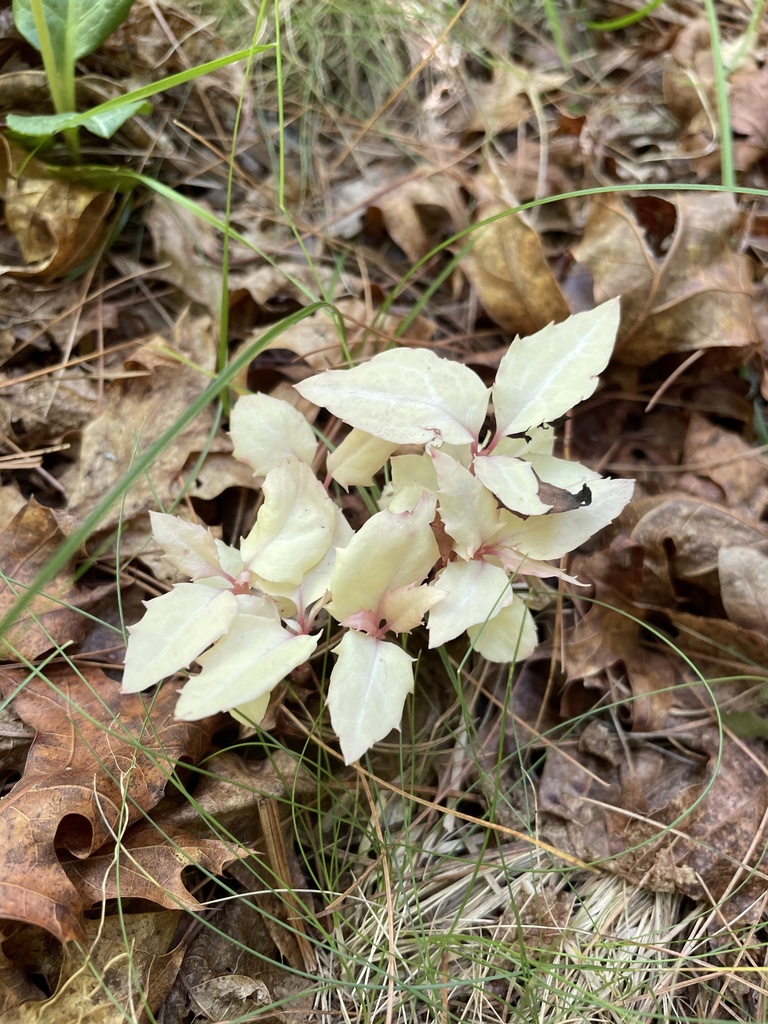
Chimaphila maculata
- Origin
- North America
- Part used
- Leaves
- Tradition
- Traditional ethnobotany
Beneath the canopy of North American forests, Chimaphila maculata, which old herbalists sometimes nicknamed for its traditional diuretic use, carpeted the ground with its white-mottled leaves. Indigenous peoples and European settlers made it a quiet remedy, passed down from generation to generation, to relieve various bodily ailments.
Traditional uses
Traditional support for the urinary tract
The leaves were traditionally used as an infusion to help with urinary comfort, particularly with feelings of heaviness or passing discomfort.
A soothing external use on the skin
Applied locally, the infused leaves or a compress made from them were used by traditional herbalists to soothe certain superficial skin irritation.
A traditional bitter tonic
Considered a bitter, astringent plant, it went into certain traditional preparations for a general tonic purpose, particularly to help with periods of passing fatigue.
A light traditional digestive use
Occasionally, a light infusion of the leaves was used in certain folk traditions to help with difficult digestion.
Before you use it
Use not recommended for pregnant or breastfeeding women, as a precaution, for lack of sufficient data. Do not give to young children without the advice of a qualified health professional. In cases of kidney or urinary trouble, or ongoing medication, consult a professional before any use, as interactions are not ruled out. Do not exceed an occasional, short-term use; prolonged use is not documented as safe.
The detailed notebook
- Prepared as a paste or decoction
- Traditional duration of use
- Known contraindications
- Related species and their uses
Where to find it
Partner herbalists — available with the detailed notebook.
Sources
PFAF, Wikipedia