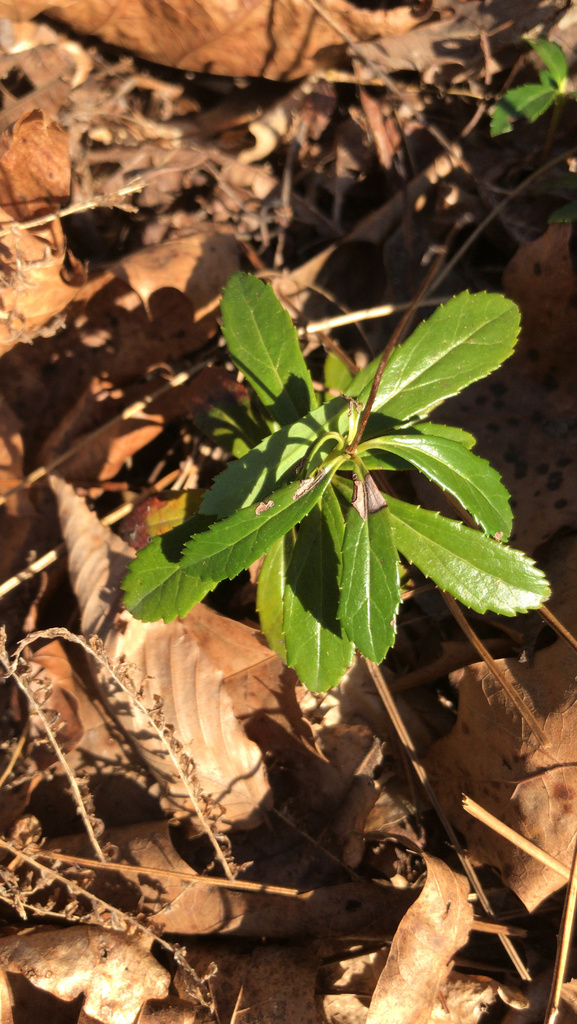
Pipsissewa
- Origin
- Europe
- Part used
- Leaves
- Tradition
- Traditional ethnobotany
Beneath the light canopy of coniferous and deciduous forests, pipsissewa unfurls its tough, evergreen, almost glossy leaves in small, unassuming rosettes. Herbalists of old, first in North America and later in Europe, long regarded it as a valuable ally of the urinary tract, hence its popular name ‘pipsissewa.’ A modest plant of the undergrowth, it holds a long-standing place in traditional Western pharmacopeias.
Traditional uses
Traditional support for the urinary tract
Pipsissewa leaf was traditionally used as an infusion to support urinary comfort and help kidney elimination functions.
A depurative plant of old-time herbalists
It was among the so-called depurative plants, used in cures to promote the body's drainage, particularly with the change of season.
Traditional use for joint pain
Certain folk traditions report its use to help with joint and rheumatic discomfort, often combined with other depurative plants.
Soothing external application
Used externally, a decoction of the leaves was sometimes applied as compresses to irritated skin or minor skin conditions.
Before you use it
Not advised during pregnancy or breastfeeding, for lack of sufficient safety data. Do not use in children without the advice of a healthcare professional. Avoid in cases of kidney failure or ongoing diuretic treatment, due to possible interactions. Prolonged or excessive use is not recommended; consult a healthcare professional before any course of treatment.
The detailed notebook
- Prepared as a paste or decoction
- Traditional duration of use
- Known contraindications
- Related species and their uses
Where to find it
Partner herbalists — available with the detailed notebook.
Sources
PFAF, Wikipedia