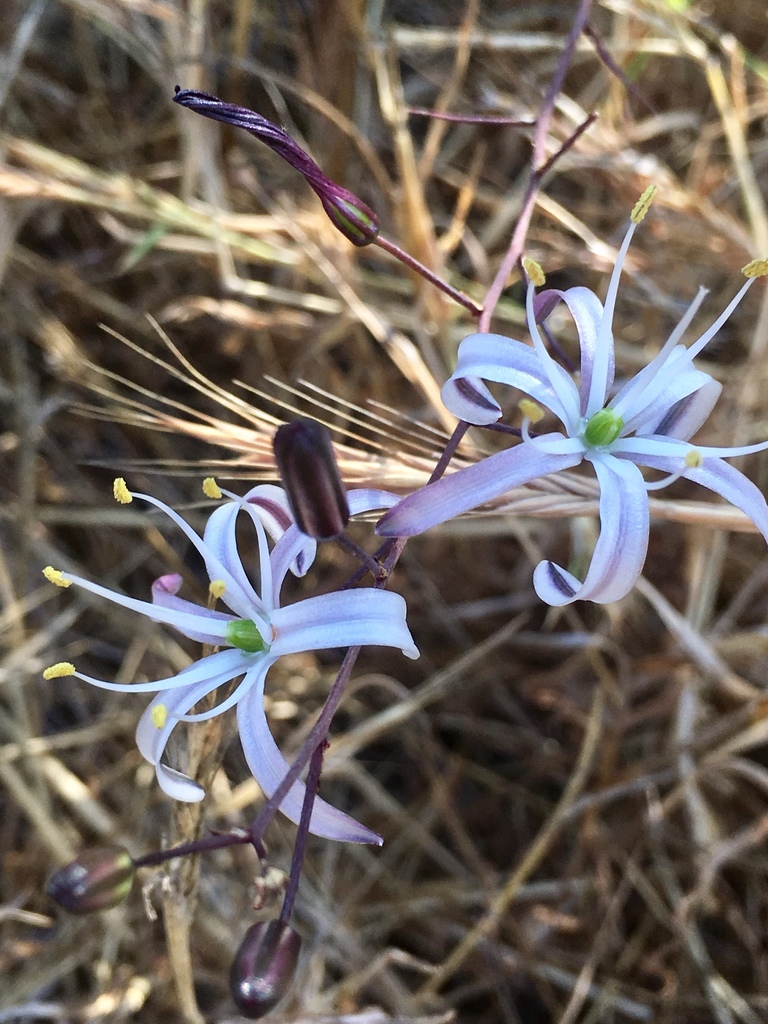
Chlorogalum pomeridianum
- Origin
- North America
- Part used
- See detailed notebook
- Tradition
- Traditional ethnobotany
Chlorogalum pomeridianum, better known as "soap plant" or "amole," grows on the dry hills and prairies of the North American Pacific coast. The Indigenous peoples of California credited it with many uses, from the natural soap drawn from its fibrous bulb to medicinal preparations applied to the skin. This bulbous plant, with its wavy foliage and quiet nocturnal flower, holds a particular place in the ethnobotanical notebooks of the New World.
Traditional uses
A traditional skin cleanser
The crushed bulb, mixed with water, produced a soapy lather traditionally used to wash the skin and hair. This external use is the oldest and best documented among the Indigenous peoples of California.
Application to stings and skin conditions
The crushed bulb, as a poultice, was applied locally to insect stings, irritation, and certain skin conditions, according to uses reported by coastal tribes.
Bulb fibers for brushes and cordage
The outer fibers of the bulb, once dried, traditionally served to make brushes and small woven objects, a use as practical as it was medicinal.
An occasional reported internal use
Some ethnobotanical sources mention an occasional internal use of the bulb in very small amounts, but this use is poorly documented and considered risky because of the saponins it contains.
Before you use it
The bulb contains saponins that can be irritating or toxic if ingested in large amounts; any internal use should be avoided without the advice of a qualified professional. External use (soap, poultice) should first be tested on a small area of skin, as some people may have a skin sensitivity. To be avoided in pregnant or breastfeeding women and young children, for lack of sufficient safety data. Do not confuse it with other similar-looking wild bulbs when harvesting; certain botanical identification is essential.
The detailed notebook
- Prepared as a paste or decoction
- Traditional duration of use
- Known contraindications
- Related species and their uses
Where to find it
Partner herbalists — available with the detailed notebook.
Sources
PFAF, Wikipedia