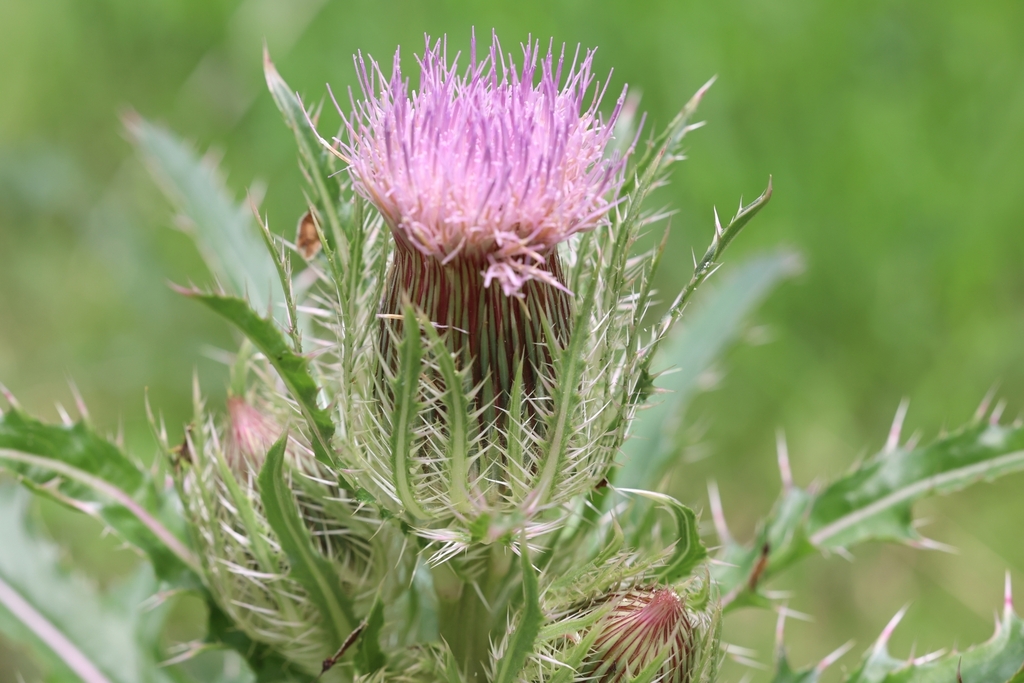
Cirsium horridulum
- Origin
- North America
- Part used
- Leaves
- Tradition
- Traditional ethnobotany
The bristly thistle, Cirsium horridulum, raises its spines and purple, or sometimes yellowish, flowers in the damp prairies and coastal marshes of North America. The Indigenous peoples of the southeastern United States, particularly the Seminole and Cherokee nations, had long known the quiet uses of its leaves, once stripped of their formidable spines.
Traditional uses
Traditional digestive support
The leaves of the bristly thistle were eaten, once stripped of their spines and cooked, to accompany meals and support digestion, in the manner of other daisy-family plants.
A wild subsistence vegetable
The young, tender leaves, stripped of their spines, were traditionally cooked as a green vegetable by certain Native American communities, particularly in the wetlands where the plant abounds.
A soothing external use
The application of preparations made from crushed leaves to the skin is reported to soothe certain superficial irritation, according to loosely formalized local folk uses.
A traditional tonic plant
Like several thistles, Cirsium horridulum was sometimes included in traditional tonic preparations, although precise ethnobotanical documentation on this point remains limited.
Before you use it
The plant's numerous, rigid spines can cause injury during harvesting; wearing thick gloves is essential. The leaves must be carefully stripped of all their spines before any preparation, whether dietary or external. The traditional use of this plant is not rigorously documented; it is recommended to consult a health professional or an experienced herbalist before any internal use. As with any little-studied wild plant, avoid use in pregnant or breastfeeding women and young children, as a precaution.
The detailed notebook
- Prepared as a paste or decoction
- Traditional duration of use
- Known contraindications
- Related species and their uses
Where to find it
Partner herbalists — available with the detailed notebook.
Sources
PFAF, Wikipedia