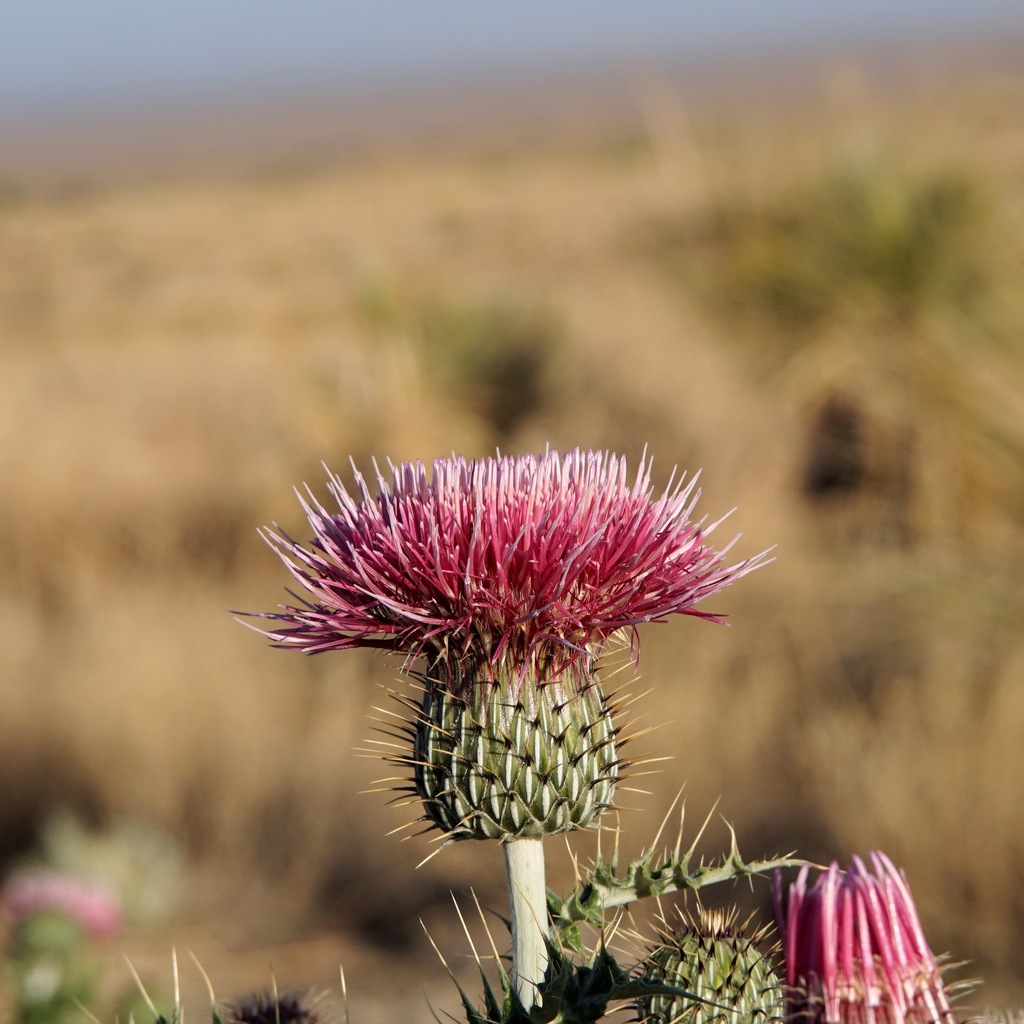
Cirsium ochrocentrum
- Origin
- North America
- Part used
- Whole plant, Root
- Tradition
- Traditional ethnobotany
A thistle of the plains and arid lands, Cirsium ochrocentrum stands proudly among the dry grasses of North America, recognizable by its golden spines and whitish down. The Indigenous peoples of the Great Plains knew this sturdy plant well and knew how to draw on it, both for food and for healing, in an oral tradition passed down from generation to generation.
Traditional uses
Root traditionally eaten
The root of this thistle was traditionally cooked or roasted by certain peoples of the plains, in the manner of a root vegetable, for its nourishing and digestive properties.
A use as a skin poultice
The whole plant, crushed or as a poultice, was reportedly applied locally to soothe certain minor skin irritation, according to reported traditional uses.
Whole plant as a fortifying decoction
A decoction of the whole plant was sometimes traditionally used as a tonic drink, thought to restore vigor after exertion or passing fatigue.
A traditional use around motherhood
Some ethnobotanical sources mention a traditional use of the root tied to the postpartum period among certain Native American communities, although these practices remain poorly documented and vary by region.
Before you use it
The spines of the fresh plant are sharp and can injure the skin; handle with gloves when harvesting. Use tied to the period of pregnancy or postpartum should only be done under the supervision of a health professional, as traditional data are imprecise. Avoid consumption in children without medical advice, because of the lack of documentation on dosing. If in doubt about identifying the species among the many North American thistles, refrain from any internal use.
The detailed notebook
- Prepared as a paste or decoction
- Traditional duration of use
- Known contraindications
- Related species and their uses
Where to find it
Partner herbalists — available with the detailed notebook.
Sources
PFAF, Wikipedia