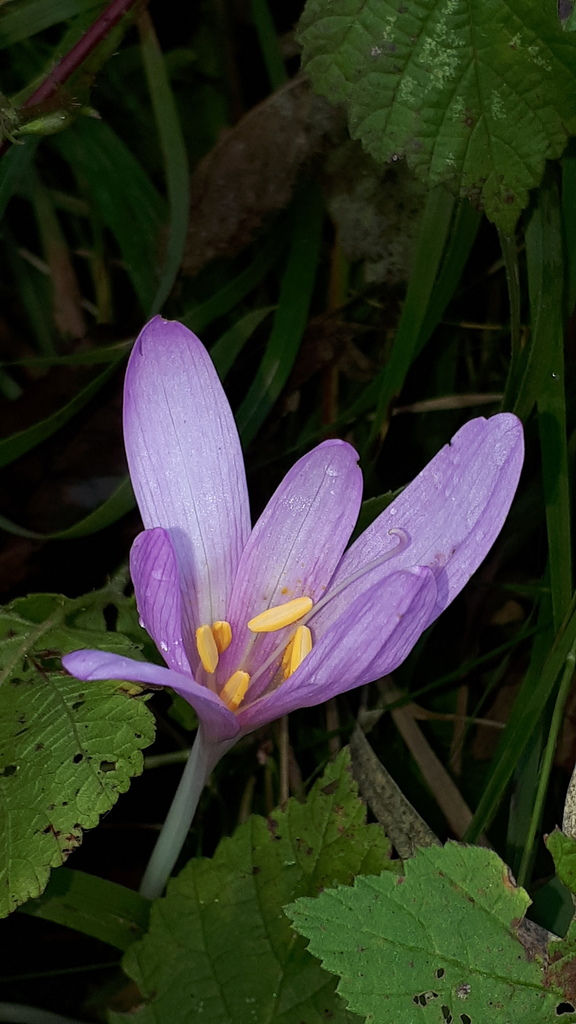
Autumn crocus
- Origin
- Europe
- Part used
- Leaves
- Tradition
- Traditional ethnobotany
A pale flower rising from meadows at summer's end, with no leaves to accompany it, the autumn crocus long intrigued the European countryside, which sometimes named it ‘meadow saffron’ or ‘dog killer.’ Old-time herbalists already ranked it among the plants to be handled with extreme caution, reserved for learned hands rather than domestic use.
Traditional uses
Traditional use for gout
The autumn crocus was historically one of the plants most reputed for relieving gout attacks and joint pain, a use dating back to Greek and Byzantine antiquity.
An old remedy for rheumatism
European folk practitioners saw it as a remedy for certain forms of inflammatory rheumatism, always administered with extreme sparingness.
Local application to painful areas
In certain rural traditions, very diluted external preparations were applied to swollen joints, in addition to strictly supervised internal use.
Before you use it
A highly toxic plant containing colchicine: the margin between an active dose and a fatal one is extremely narrow, even for small amounts of leaves. Strictly discouraged for self-medication; any reported historical use required a precise dosage reserved for trained practitioners. Contraindicated during pregnancy, breastfeeding, in children, and in cases of kidney or liver failure. Known dangerous interactions with numerous medications; never combine without medical advice.
The detailed notebook
- Prepared as a paste or decoction
- Traditional duration of use
- Known contraindications
- Related species and their uses
Where to find it
Partner herbalists — available with the detailed notebook.
Sources
Wikipedia