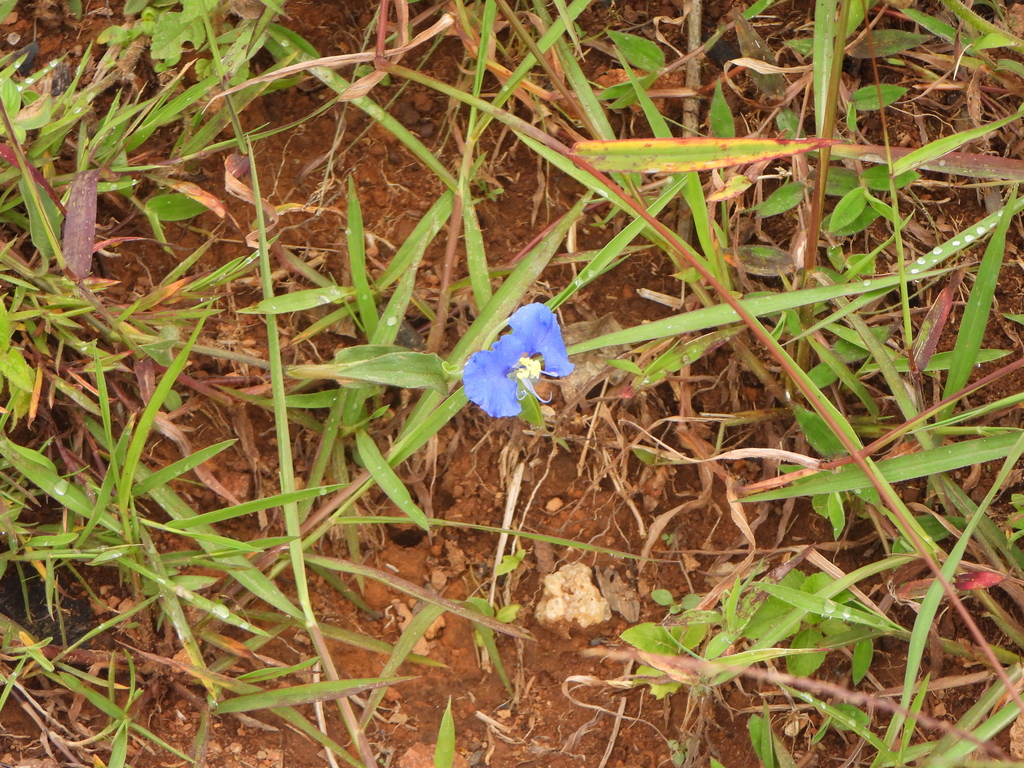
Commelina madagascarica
- Origin
- Africa
- Part used
- See detailed notebook
- Tradition
- Traditional ethnobotany
A discreet herbaceous plant of the undergrowth and damp margins of Madagascar, Commelina madagascarica belongs to the large dayflower family, several related species of which have long been used in African and Asian pharmacopeias. Traditional Malagasy healers mention it among the fresh plants used externally and in light infusions, though no thorough scientific documentation yet exists on the subject.
Traditional uses
Easing minor skin irritations
The crushed fresh plant was traditionally applied as a poultice on stings, scratches, or superficial skin irritations.
Traditional tea for digestive discomfort
A light decoction of the leaves was sometimes drunk locally to help with mild digestive troubles, according to folk uses reported in Madagascar.
Traditional use against mild fevers
Like other Commelina species of Africa and Asia, this species is cited in certain local traditions as a cooling plant used during feverish states.
A plant of cooling traditions
Dayflowers in general are reputed in several folk pharmacopeias to promote urinary elimination, a property also attributed to this Malagasy species.
What to know before use
Scientific data on this particular species are very limited: caution requires not exceeding occasional, traditional use. Avoid any internal use in pregnant or breastfeeding women, as well as in young children, for lack of sufficient safety data. Do not use in case of ongoing medication without the advice of a health professional, due to undocumented interactions. Reserve external use for skin without deep lesions and discontinue in case of a skin reaction.
The detailed notebook
- Prepared as a paste or decoction
- Traditional duration of use
- Known contraindications
- Related species and their uses
Where to find it
Partner herbalists — available with the detailed notebook.
Sources
PFAF