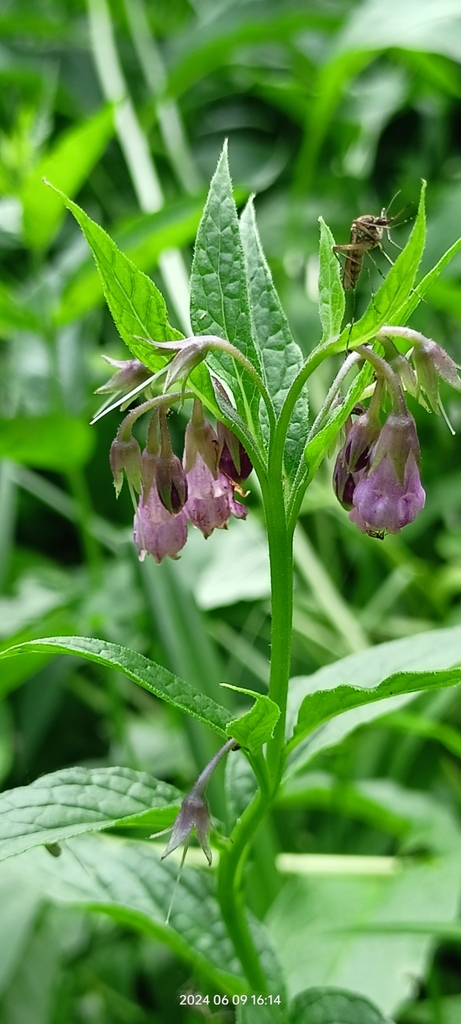
Comfrey
- Origin
- Europe
- Part used
- Leaves, Root
- Tradition
- Traditional ethnobotany
Comfrey, an old companion of gardens and damp woodland edges in Europe, owes its very name to its ancestral reputation for "knitting" bruised tissue back together. Since the Middle Ages, herbalists and countryfolk have used it as a poultice to support healing from bumps, sprains, and fractures, earning it the nickname "knitbone." Its mucilaginous root and broad, hairy leaves are still linked, in folk memory, to the care of the bruised body.
Traditional uses
Bumps and bruises
Comfrey was traditionally applied as a poultice on sprains, strains, and bruises, to accompany rest and recovery of the affected area.
Healing and damaged skin
For external use only, the leaves and root were said to help calm the appearance of minor superficial wounds and irritated skin.
Traditional support for bone recovery
Its folk name "knitbone" recalls its old use as a poultice for fractures, as a complement to — never a replacement for — proper medical care.
Soothing local compresses
Herbalists of the past used compresses of root decoction on sore or swollen areas of the body.
Before you use it
External use only: comfrey contains pyrrolizidine alkaloids potentially toxic to the liver if ingested or applied to broken skin over a prolonged period. Internal use, and use on broken skin, is to be avoided entirely for pregnant or breastfeeding women and for young children. Never apply to a deep open wound or to a fracture not set by a healthcare professional. Consult a healthcare professional or a qualified herbalist before any use, particularly if taking other medication.
The detailed notebook
- Prepared as a paste or decoction
- Traditional duration of use
- Known contraindications
- Related species and their uses
Where to find it
Partner herbalists — available with the detailed notebook.
Sources
PFAF, Wikipedia