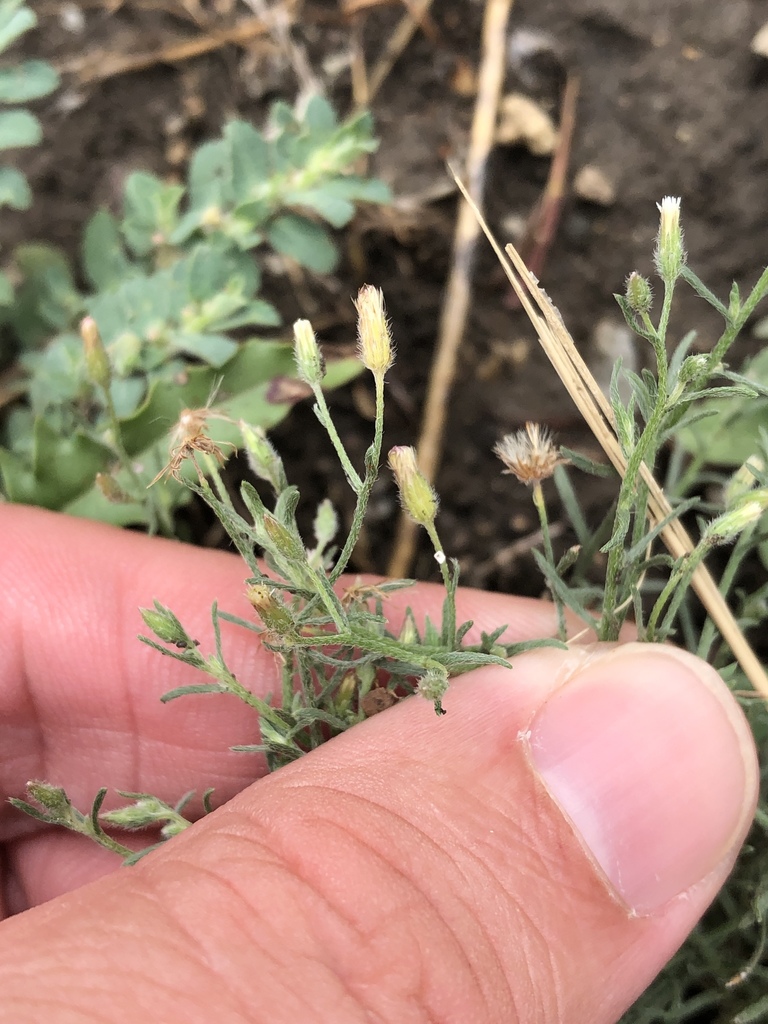
Conyza ramosissima
- Origin
- North America
- Part used
- See detailed notebook
- Tradition
- Traditional ethnobotany
Quiet among the weedy herbs of the North American plains, the branching fleabane was long gathered by Native American healers who recognized, beneath its modest appearance, a plant of many uses. Its very name, Conyza, recalls old Greek preparations of fragrant plants used in fumigation. Little studied by modern botany, it remains today a plant of oral tradition more than scholarly literature.
Traditional uses
Mild digestive trouble
The dried whole plant was traditionally infused to ease digestive discomfort and bloating, according to certain Native American practices of the plains.
Respiratory fumigation
Dried and then burned, the plant served as a fumigation to clear the airways during colds or flu-like states, in a manner close to other Conyza species used the same way elsewhere in the world.
An external use for irritation
A use as a poultice or local wash of the fresh, crumpled leaves is reported to soothe minor skin irritation.
A purification plant
Like several fleabanes, it was reportedly used as a fumigation for the symbolic purpose of purifying a space, more than for a strictly medicinal purpose.
Before you use it
A traditional use poorly documented scientifically: caution is warranted and the advice of a health professional remains recommended before any use. Avoid in pregnant or breastfeeding women, for lack of safety data. Do not use in young children. Certain Conyza species contain compounds irritating to the skin and mucous membranes; test on a small area before external use.
The detailed notebook
- Prepared as a paste or decoction
- Traditional duration of use
- Known contraindications
- Related species and their uses
Where to find it
Partner herbalists — available with the detailed notebook.
Sources
PFAF