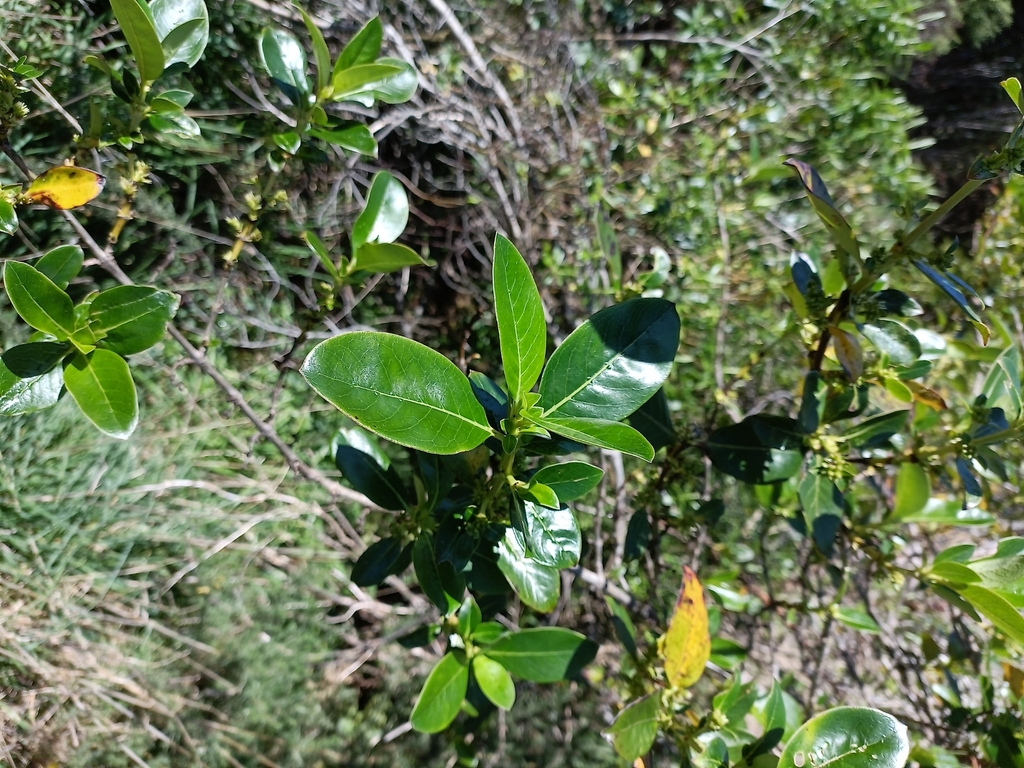
Coprosma robusta
- Origin
- Oceania
- Part used
- Leaves
- Tradition
- Traditional ethnobotany
Coprosma robusta, a shrub with glossy foliage from New Zealand's understories and edges, is known to the Maori as karamu. Its leaves have long found a place in the traditional uses of the Maori people, notably in care related to digestion and the skin. This entry gathers the uses reported by tradition, for historical and informational purposes.
Traditional uses
Traditional leaf infusion
Karamu leaves were traditionally prepared as a decoction by the Maori to accompany digestive and intestinal comfort.
Traditional external skin care
A leaf preparation was sometimes used externally to soothe certain skin irritations, according to reported customary uses.
An occasional traditional tonic
Karamu is among the plants of Maori pharmacopoeia used generally to support well-being, without a single clearly dominant use according to available sources.
Traditional use for feverish states
Certain ethnobotanical sources mention a traditional use of boiled leaves during feverish states, as part of customary Maori remedies.
Before you use it
Scientific data on the composition and toxicity of Coprosma robusta remain limited; caution is warranted for any internal use. Avoid use during pregnancy or breastfeeding, and in young children, for lack of sufficient data. Do not exceed occasional consumption and seek the advice of a health professional or an experienced herbalist before any prolonged internal use. For skin application, test beforehand on a small area of skin to rule out any adverse reaction.
The detailed notebook
- Prepared as a paste or decoction
- Traditional duration of use
- Known contraindications
- Related species and their uses
Where to find it
Partner herbalists — available with the detailed notebook.
Sources
PFAF, Wikipedia