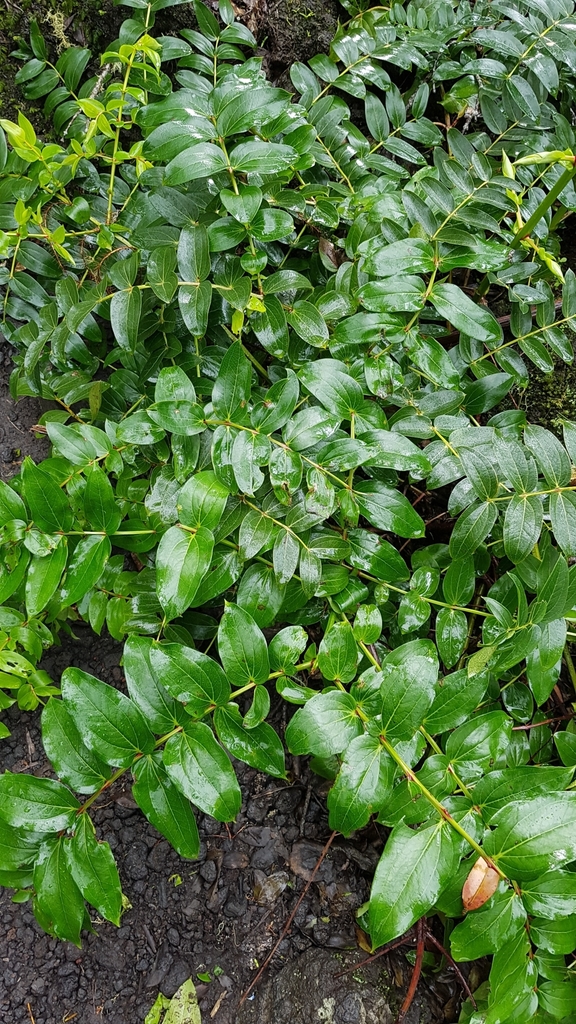
Coriaria arborea
- Origin
- Oceania
- Part used
- Leaves
- Tradition
- Traditional ethnobotany
Tutu, as the Maori of New Zealand called it, is a shrub as feared as it is respected, its history intimately intertwined with that of the Pacific lands. Coriaria arborea carries within it an ancient paradox: the berry that surrounds it can nourish when prepared with precise knowledge, while its seeds and foliage conceal powerful poisons. The elders spoke of it with an almost ritual caution, passed down from generation to generation.
Traditional uses
External application on the skin
Crushed tutu leaves were sometimes applied externally to certain minor skin ailments, according to traditional Maori practices not documented in great detail.
An old reported veterinary use
Certain ethnobotanical accounts mention a traditional use of the foliage for local veterinary purposes, though these practices remain poorly formalized in written sources.
Carefully filtered berry juice
The juice extracted from ripe berries, once the toxic seeds had been meticulously removed by filtering, was traditionally drunk by the Maori as a beverage or used as a base for sweet preparations.
Before you use it
The whole plant, except for the well-filtered pulp of ripe berries, is considered highly toxic, notably the seeds and young shoots. Accidental ingestion may cause severe convulsions and represents a documented danger, including for livestock. This plant must never be used without guidance from an experienced expert or a health professional. Formally not advised for children, pregnant or breastfeeding women, and in case of doubt about botanical identification.
The detailed notebook
- Prepared as a paste or decoction
- Traditional duration of use
- Known contraindications
- Related species and their uses
Where to find it
Partner herbalists — available with the detailed notebook.
Sources
Wikipedia