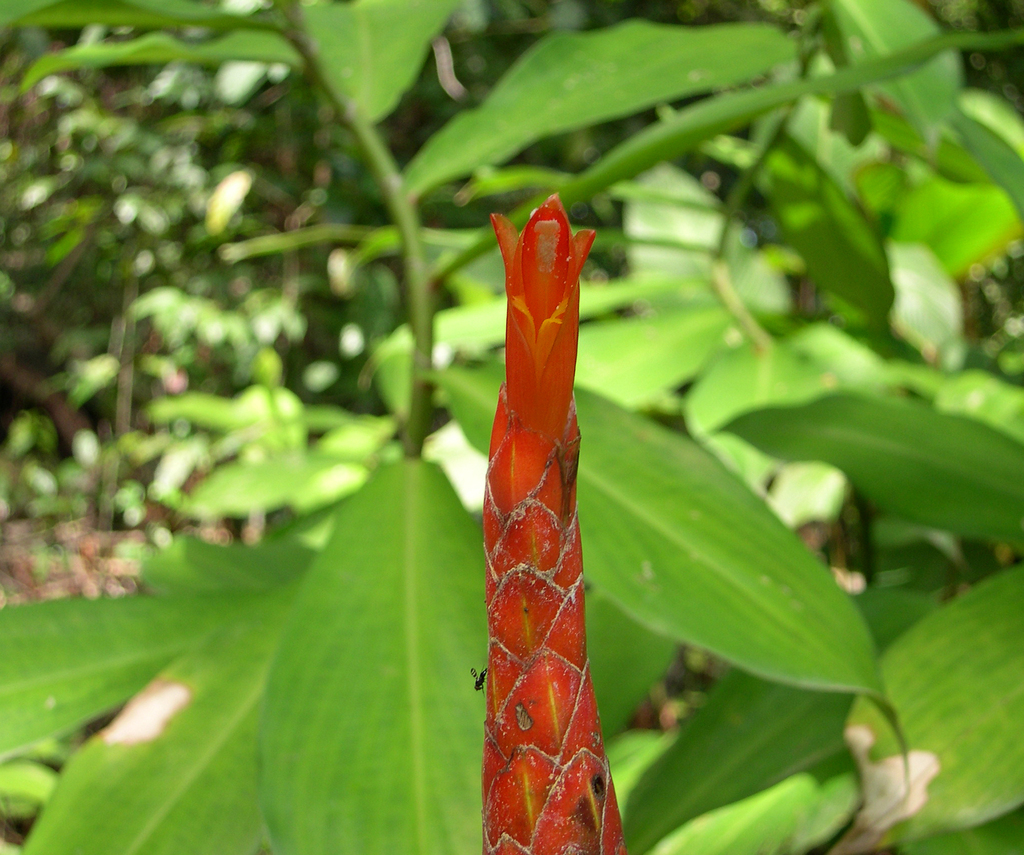
Costus pulverulentus
- Origin
- South America
- Part used
- See detailed notebook
- Tradition
- Traditional ethnobotany
In the humid undergrowth of South America, Costus pulverulentus stands out for its spiraled stem and velvety leaves, a distinctive feature that earns it the common name “wild sugar cane” in some regions. Traditional healers of Amazonian and Andean communities attributed various virtues to it, passed down through generations more by oral tradition than by scholarly writings.
Traditional uses
Traditional digestive support
The stem and young shoots were sometimes chewed or infused to soothe mild digestive troubles, following the folk practices of certain forest communities.
Traditional use against fevers
Some local pharmacopoeias report the use of stem decoctions to accompany feverish states, although this practice remains scientifically under-documented.
External application on skin irritations
The fresh sap of the stem was traditionally applied to the skin to soothe certain irritations or small wounds, in the manner of other Costus species used in the South American pharmacopoeia.
Traditional uses linked to the female cycle
In some traditions, preparations made from this plant were reserved for specific women's uses, an application that today calls for great caution in the absence of reliable data.
What to know before use
A scientifically under-documented traditional use: caution is advised, especially for internal use. To be formally avoided during pregnancy and breastfeeding, owing to traditional uses suggesting an action on the female system. Do not use in children without the advice of a qualified health professional. Always seek advice from a herbalist or doctor before any use, for lack of reliable safety studies on this specific species.
The detailed notebook
- Prepared as a paste or decoction
- Traditional duration of use
- Known contraindications
- Related species and their uses
Where to find it
Partner herbalists — available with the detailed notebook.
Sources
PFAF, Wikipedia