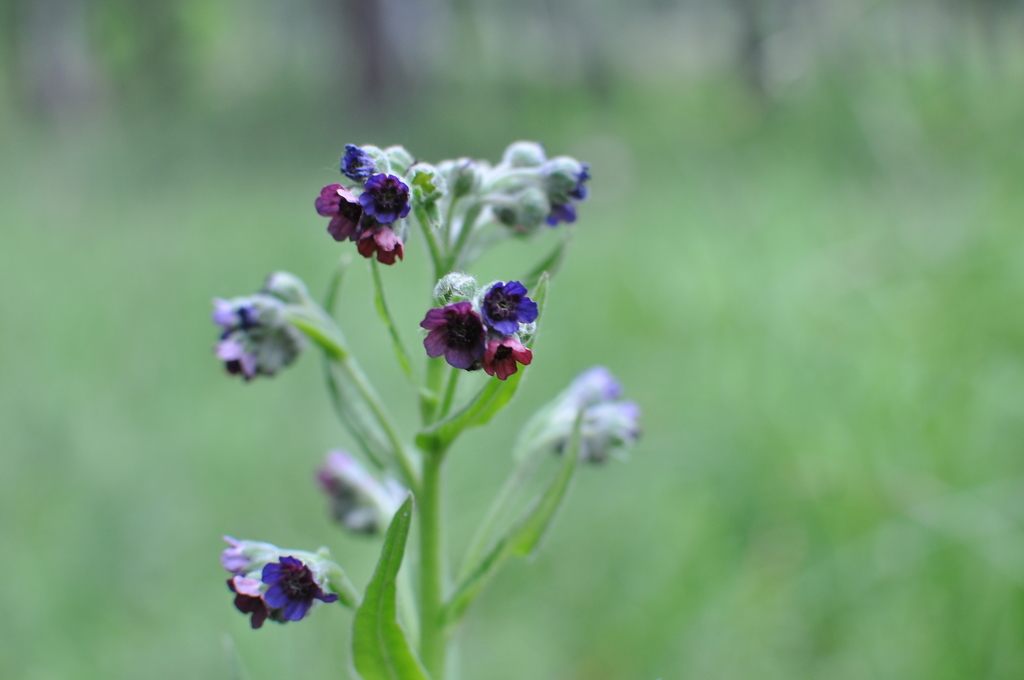
Cynoglossum officinale
- Origin
- Europe
- Part used
- Leaves, Root
- Tradition
- Traditional ethnobotany
Hound's tongue, also called ‘dog's tongue’ for the shape and velvety texture of its leaves, grew readily along the paths and old buildings of Europe. Old-time herbalists ranked it among the emollient plants, used as a poultice to soothe the skin, while always handling it with a caution long known to be necessary.
Traditional uses
Soothing skin irritation
The root and leaves were traditionally used as a poultice to calm irritated skin, minor wounds, or local inflammation, owing to their soothing, mucilaginous texture.
A poultice for bruises and swelling
Used externally, the crushed root or a bruised leaf was applied to bruises, sprains, and swelling to ease the discomfort, according to an old folk practice.
Soothing for the respiratory tract
In the past, a light root decoction was sometimes used to soothe the throat and calm a dry cough, a use now largely abandoned in favor of better-documented and safer plants.
An old use in animal care
In certain rural areas, hound's tongue was applied to livestock wounds, hence its popular nickname, though this use belongs more to rural folklore than to a well-established practice.
Before you use it
Hound's tongue contains pyrrolizidine alkaloids known to be toxic to the liver; its internal use is strongly discouraged and should be avoided without the advice of a qualified healthcare professional. To be strictly avoided during pregnancy or breastfeeding, as well as in children, due to the documented risk of liver toxicity. Prolonged external use, or use on broken skin, is not without risk: seek the advice of a herbalist or doctor before any application, particularly if repeated. Never confuse it with other plants with similar leaves; when in doubt about identification, refrain from any use.
The detailed notebook
- Prepared as a paste or decoction
- Traditional duration of use
- Known contraindications
- Related species and their uses
Where to find it
Partner herbalists — available with the detailed notebook.
Sources
PFAF, Wikipedia