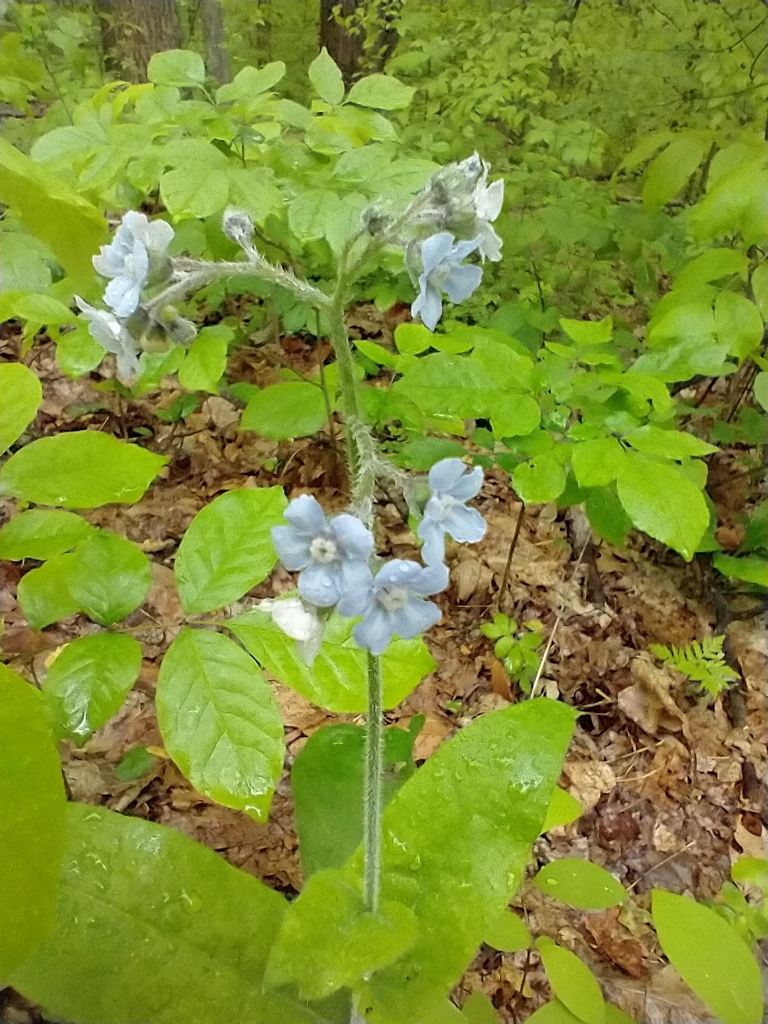
Cynoglossum virginianum
- Origin
- North America
- Part used
- See detailed notebook
- Tradition
- Traditional ethnobotany
Known to the herbalists of the forests of North America as "Virginia hound's tongue," this hairy plant with pale blue flowers grew in open woodlands, where Amerindians and early settlers recognized it by its distinctive smell and rough leaves. Its botanical name, from the Greek "cynos" (dog) and "glossa" (tongue), recalls the shape and texture of its leaves. It belongs to the same family as comfrey, with which it shares certain traditional reputations as well as certain cautions.
Traditional uses
Soothing wounds and bruises
The root and leaves, applied as a poultice, were traditionally used by certain Indigenous healers to calm skin irritations, minor wounds, and bruises.
A traditional use against coughing
A light root decoction was sometimes used in North American folk traditions to soothe stubborn coughs, in the manner of other mucilaginous plants of its family.
A reported astringent effect
The tannins present in the root gave it a reputation as a gentle astringent, used occasionally and cautiously in certain traditional pharmacopoeias.
Poultices for local pain
In external use, the crushed plant was applied as a compress to painful joints or swollen areas, according to popular uses passed down orally.
Before you use it
Cynoglossum virginianum contains pyrrolizidine alkaloids, compounds known for their liver toxicity with prolonged or repeated internal use: such use is now strongly discouraged without professional supervision. Strictly to be avoided in pregnant or breastfeeding women, as well as in children, due to the risks linked to these same alkaloids. Even external use should remain occasional and avoid large open wounds or mucous membranes, as a precaution. Any use, even traditional, deserves the prior advice of a health professional or an experienced herbalist, given this plant's toxicity profile.
The detailed notebook
- Prepared as a paste or decoction
- Traditional duration of use
- Known contraindications
- Related species and their uses
Where to find it
Partner herbalists — available with the detailed notebook.
Sources
PFAF