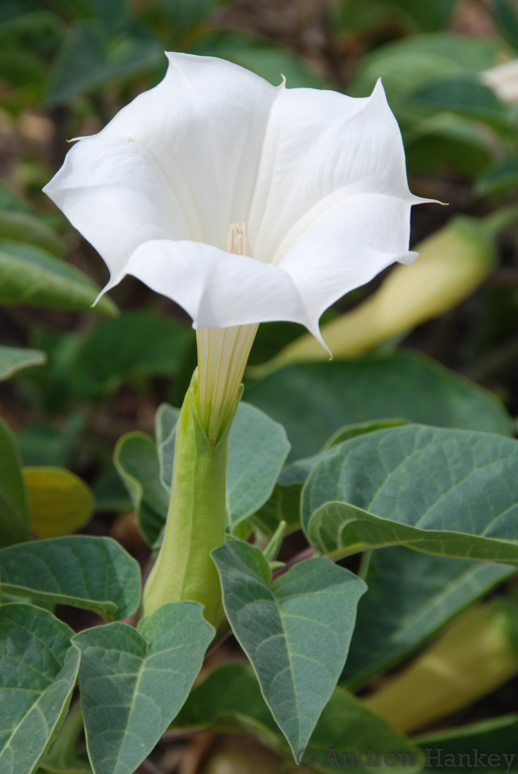
Datura metel
- Origin
- North America
- Part used
- Root
- Tradition
- Traditional ethnobotany
Datura metel, a plant with large trumpet-shaped flowers and a fearsome reputation, has accompanied the medicinal traditions of Asia and the Americas for centuries, at times revered, at times feared. The herbalists of old handled it with extreme caution, aware that the line between remedy and poison is especially narrow here.
Traditional uses
Traditional fumigation for asthma
In certain Asian traditions, dried leaves and roots were burned and their smoke inhaled to relieve asthma attacks and breathing difficulties.
Poultices for joint pain
The root, prepared as a poultice or ointment, was traditionally applied to painful joints and areas affected by rheumatism.
A plant of divinatory rites
Among certain peoples of North America, datura held an important ritual place, used during initiatory ceremonies for its consciousness-altering effects, under the strict supervision of an initiate.
External application to wounds and abscesses
For external use only, the root reduced to a paste was sometimes applied to wounds, abscesses, or boils in certain folk traditions.
Before you use it
Datura metel contains highly toxic tropane alkaloids (scopolamine, hyoscyamine, atropine): any ingestion, even in small amounts, can cause serious effects (delirium, cardiac disturbances, convulsions) and endanger life. No internal use should be attempted without supervision by a qualified health professional; this plant is classified as dangerous in many countries. Strictly contraindicated in pregnant or breastfeeding women, children, and in cases of heart disease, glaucoma, or neurological disorders. Never use unsupervised: any handling, even external, requires gloves and thorough knowledge of the plant.
The detailed notebook
- Prepared as a paste or decoction
- Traditional duration of use
- Known contraindications
- Related species and their uses
Where to find it
Partner herbalists — available with the detailed notebook.
Sources
Wikipedia