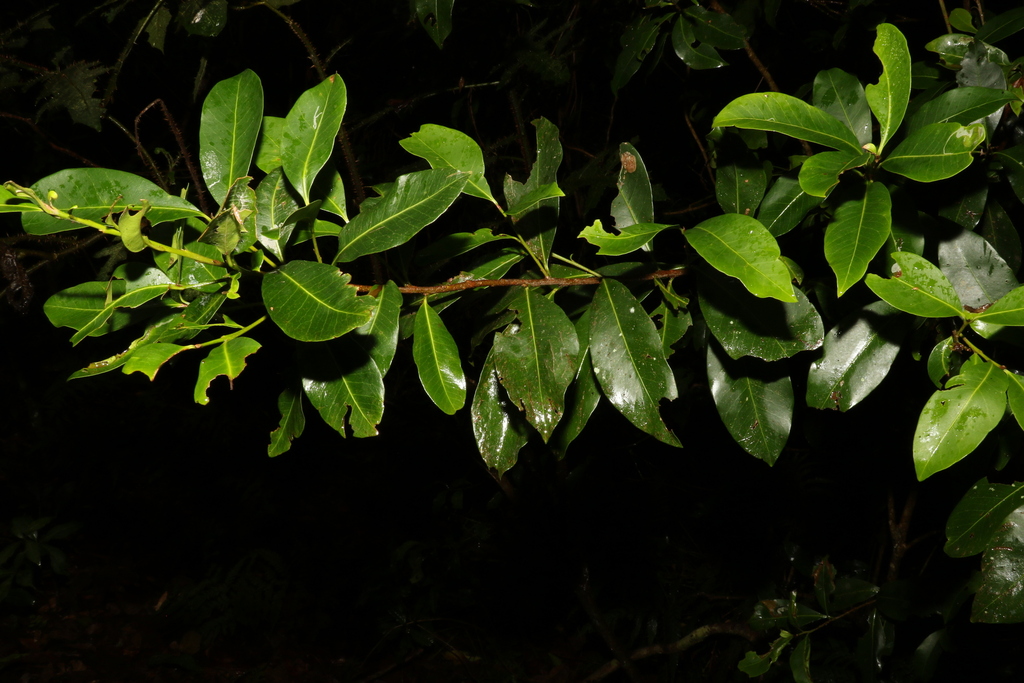
Duboisia myoporoides
- Origin
- Oceania
- Part used
- See detailed notebook
- Tradition
- Traditional ethnobotany
A shrub of Australia's coastal forests, Duboisia myoporoides was known to Aboriginal peoples long before Western science took an interest in it in the nineteenth century for its potent alkaloids. Sometimes nicknamed "corkwood," it holds a place apart in the notebooks of herbalism, at the border between an ancient remedy and a modern pharmaceutical raw material.
Traditional uses
Ritual and ceremonial chewing
The leaves were traditionally chewed by certain Aboriginal peoples of Australia, often mixed with ash, in a social and ritual use close to that of tobacco or betel.
An old pupil-dilating effect
The plant's effects on the pupil were noted empirically long before its alkaloids were isolated, which later served as the basis for ophthalmic preparations.
An effect on secretions and restlessness
In certain traditions, the plant was associated with a use aimed at calming excessive restlessness or reducing abundant secretions, an effect now attributed to its anticholinergic alkaloids.
A remedy for seasickness
In the twentieth century, preparations derived from the plant were traditionally used at sea to ease motion-related nausea, a use popularized in the form of transdermal patches.
Before you use it
A strongly toxic plant containing tropane alkaloids (hyoscine/scopolamine, hyoscyamine): never consume without supervision by a qualified professional. Contraindicated during pregnancy, breastfeeding, glaucoma, or heart or urinary conditions. Risk of serious interactions with numerous medications (anticholinergics, sedatives, antidepressants). Use forbidden in children; the margin between an active dose and a toxic dose is very narrow.
The detailed notebook
- Prepared as a paste or decoction
- Traditional duration of use
- Known contraindications
- Related species and their uses
Where to find it
Partner herbalists — available with the detailed notebook.
Sources
PFAF