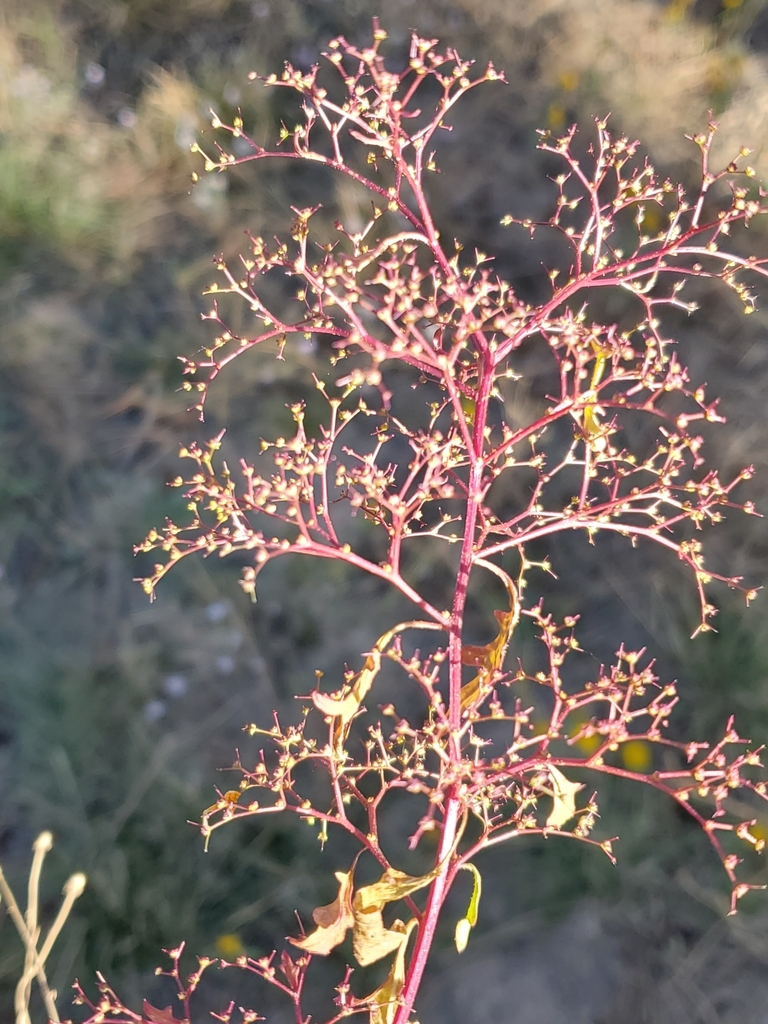
Dysphania graveolens
- Origin
- North America
- Part used
- See detailed notebook
- Tradition
- Traditional ethnobotany
On the high arid plateaus of North America, Indigenous peoples knew this fragrant plant as wild "epazote" or Mexican tea, a close cousin of culinary epazote. Its powerful scent, blending camphor and citrus, set it apart in traditional pharmacopoeia as well as in the cuisine of desert regions.
Traditional uses
A traditional digestive aid
The dried leaves were sometimes infused in small amounts to soothe bloating and aid digestion after heavy meals, in the manner of other aromatic goosefoots.
An old vermifuge use
Certain communities used the plant, rich in volatile compounds, as a traditional vermifuge, a use shared with other Dysphania species such as wormseed.
Fumigation for respiratory ailments
The dried plant was sometimes burned or infused as a fumigation to clear the airways, its camphorous scent being associated with a traditional decongestant effect.
A repellent and ceremonial plant
Crushed and placed in dwellings, it was traditionally used to repel certain insects, and also featured in ceremonial uses among certain Indigenous groups.
Before you use it
A plant with an essential oil rich in ascaridole, a compound that can be toxic at high doses: prolonged or concentrated use should be avoided without a professional's advice. Strongly discouraged during pregnancy and breastfeeding due to its traditional use as a vermifuge and its active compounds. To be avoided in young children and people with weakened liver or kidney function. Never consume the pure essential oil; limit use to mild, occasional preparations, and seek the advice of a health professional in case of doubt.
The detailed notebook
- Prepared as a paste or decoction
- Traditional duration of use
- Known contraindications
- Related species and their uses
Where to find it
Partner herbalists — available with the detailed notebook.
Sources
PFAF