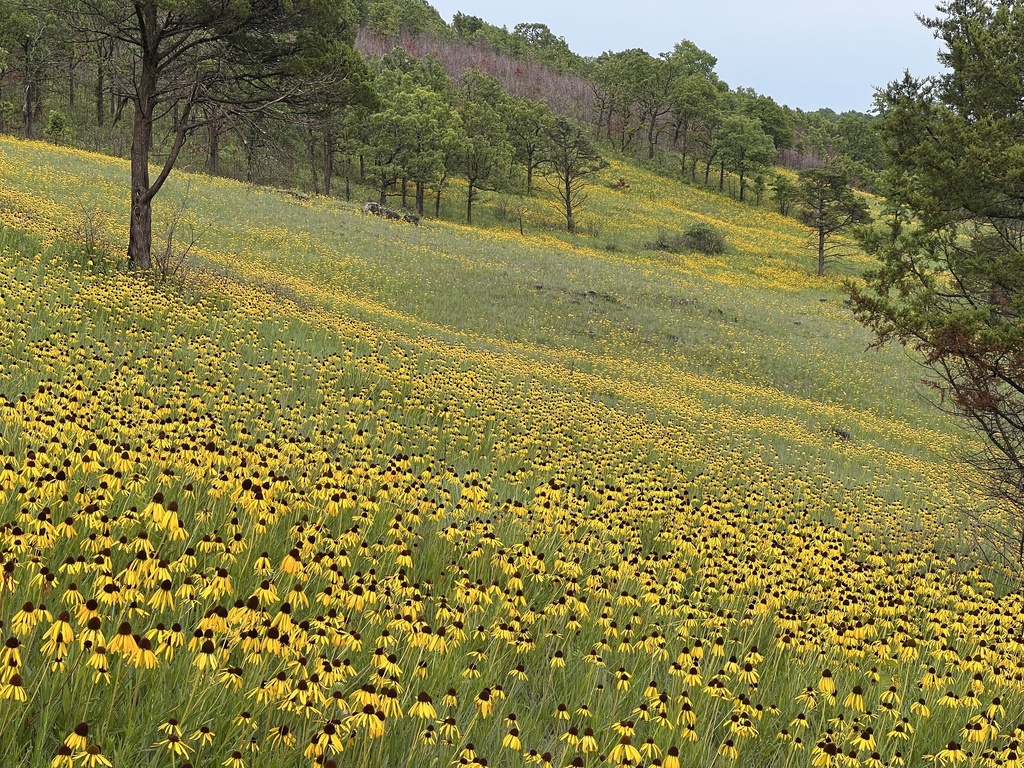
Echinacea
- Origin
- North America
- Part used
- Leaves, Root
- Tradition
- Traditional ethnobotany
An emblematic flower of the great plains of North America, echinacea was used by many Indigenous peoples, notably the Lakota and Cheyenne, to support the body against the minor ailments of winter. Introduced to Europe in the nineteenth century, it is today one of the most studied plants for accompanying seasonal colds.
Traditional uses
Support during colds
The root and leaves were traditionally used at the first signs of a cold, to support the body during this vulnerable period.
A tonic in winter
The Plains tribes consumed echinacea to strengthen themselves before winter, a practice later adopted by settlers and Western herbalists.
A traditional use on minor wounds
The crushed roots, or a poultice of them, were applied locally to insect bites, small wounds, and skin irritation.
Soothing an irritated throat
Chewed fresh or taken as an infusion, the root was reputed to produce a tingling sensation followed by local soothing of the throat.
Before you use it
Not recommended in cases of autoimmune diseases or immune system disorders, except on prior medical advice. Not recommended for pregnant or breastfeeding women without consulting a health professional. Prolonged use beyond a few weeks is not advised without a practitioner's guidance; breaks are traditionally observed. Possible allergic reactions in people sensitive to plants of the Asteraceae family (daisies, sunflower).
The detailed notebook
- Prepared as a paste or decoction
- Traditional duration of use
- Known contraindications
- Related species and their uses
Where to find it
Partner herbalists — available with the detailed notebook.
Sources
PFAF, PubMed, Wikipedia