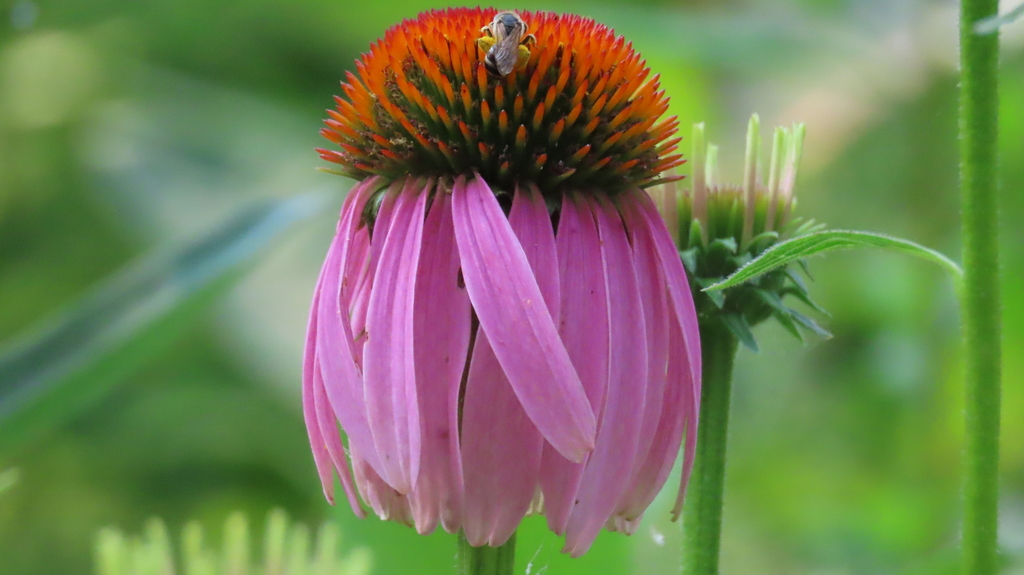
Purple Coneflower
- Origin
- North America
- Part used
- See detailed notebook
- Tradition
- Traditional ethnobotany
Native to the great plains of North America, purple coneflower was used by several Indigenous peoples, notably the Lakota, to support the body against the rigors of cold and difficult seasons. Introduced to Europe in the twentieth century, it is today one of the most widely cultivated plants in traditional herbalist gardens.
Traditional uses
Traditional bodily support
Purple coneflower is traditionally used as winter approaches to support the body during seasonal colds.
Comfort for the airways
The Plains tribes used the root to soothe the throat and help with mild, passing respiratory ailments.
A traditional use on the skin
Applied locally, the plant was traditionally used as a poultice to soothe minor skin irritation and stings.
Help with mild feverish states
It was also used as a decoction to help with the fatigue linked to colds and the mild pain that comes with them.
Before you use it
Not recommended in cases of autoimmune disease or immune system disorders, due to its presumed stimulating action. Prolonged use beyond a few consecutive weeks is not traditionally recommended; a break is advised. May cause allergic reactions in people sensitive to plants of the Asteraceae family. Use in pregnant or breastfeeding women and young children should only happen on the advice of a health professional.
The detailed notebook
- Prepared as a paste or decoction
- Traditional duration of use
- Known contraindications
- Related species and their uses
Where to find it
Partner herbalists — available with the detailed notebook.
Sources
PFAF, PubMed