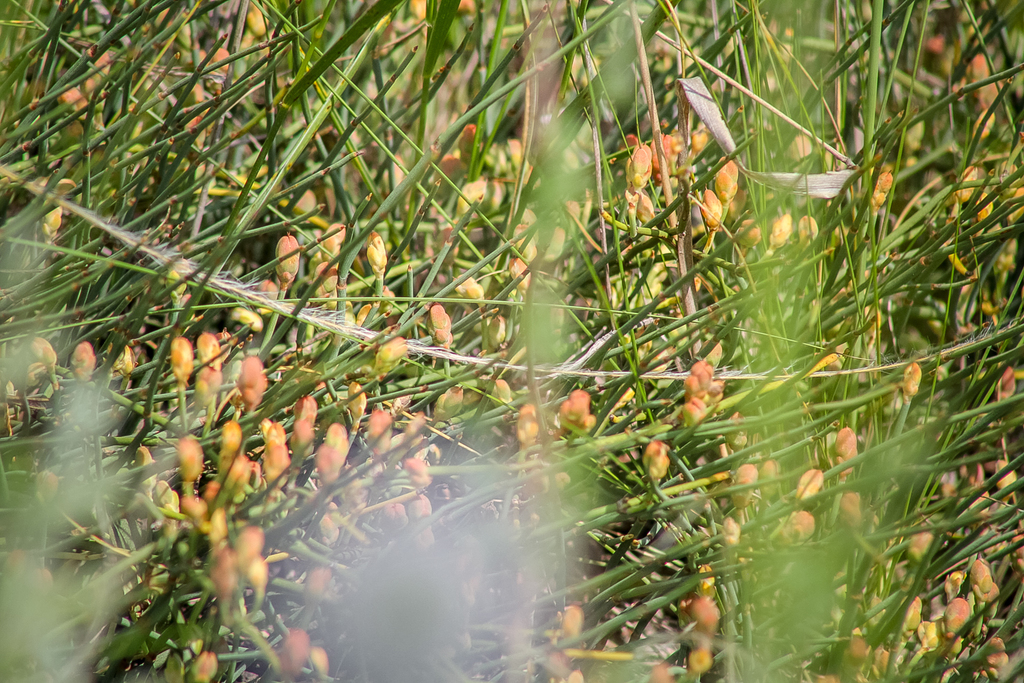
Ephedra distachya
- Origin
- Europe
- Part used
- See detailed notebook
- Tradition
- Traditional ethnobotany
Ephedra, a discreet shrub of Europe's coastal sands and rocky shores, was long noted for its green, jointed, almost leafless stems. Old-time herbalists around the Mediterranean and in Asia credited it with the virtue of ‘clearing the breath’ and reviving a tired body, a use it shares with its more famous Asian cousins.
Traditional uses
Traditional support for the breath
The dried stems were traditionally used to help with respiratory discomfort and congested airways, following the old-time logic of clearing the breath.
A passing burst of energy
Certain folk traditions attributed to ephedra a tonic and stimulating effect, used occasionally to fight fatigue or low spirits.
Traditional vasoconstrictive use
The plant featured in preparations meant to constrict and decongest tissues, a use reported particularly for congested nasal passages.
Help with feverish states
In certain European and Asian folk pharmacopeias, ephedra was among the plants used for colds and passing feverish states.
Before you use it
A plant containing alkaloids (ephedrine, pseudoephedrine) responsible for powerful stimulant effects on the heart and nervous system: prior medical advice is essential before any use. Strongly contraindicated in cases of high blood pressure, heart conditions, glaucoma, hyperthyroidism, as well as during pregnancy and breastfeeding. To be avoided in children and in those on medication, particularly antidepressants (MAOIs), stimulants, or cardiovascular treatments, due to serious interaction risks. The sale and use of this plant are regulated in several countries due to its potential for misuse and its risks; it should never be used without the supervision of a qualified healthcare professional.
The detailed notebook
- Prepared as a paste or decoction
- Traditional duration of use
- Known contraindications
- Related species and their uses
Where to find it
Partner herbalists — available with the detailed notebook.
Sources
PFAF