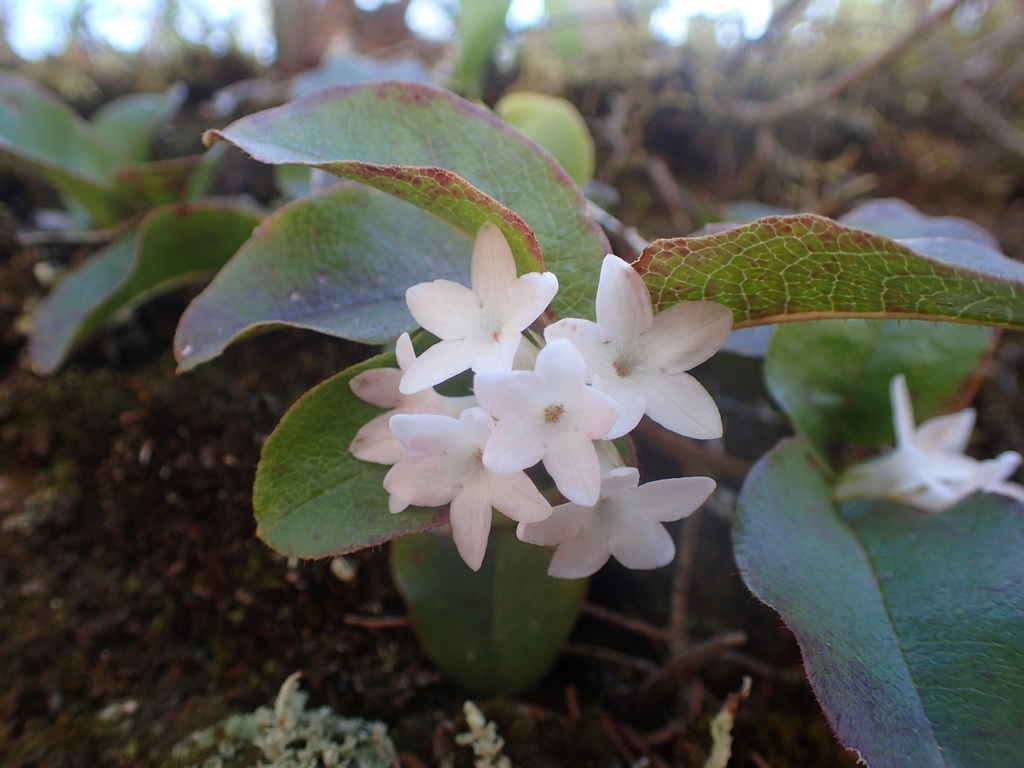
Epigaea repens
- Origin
- North America
- Part used
- Leaves, Flowers
- Tradition
- Traditional ethnobotany
Beneath the melting snow of the forests of the American East, trailing arbutus unfolds its small, fragrant pink flowers, often among the first of spring. The Indigenous peoples of North America, notably the Mohicans who gave it its vernacular name "Mayflower," used it for generations as a plant of the urinary tract. European settlers took up its use in their folk pharmacopoeia as early as the eighteenth century.
Traditional uses
Traditional support for the urinary tract
The leaves were traditionally infused to support urinary comfort, in the same family of uses as other woodland plants such as bearberry.
A mild digestive astringent use
Because of its tannin content, the plant was sometimes used as a light tea for its traditional astringent properties on the digestive mucous membranes.
Traditional relief of joint pain
Certain North American herbalist traditions report a use as a decoction to help with rheumatic-type pain, both internally and externally.
Soothing compresses on the skin
The flowers and leaves were sometimes prepared as a compress for a soothing external use on the skin, in local folk tradition.
Before you use it
A plant poorly documented by modern research: its use should remain occasional and be supervised by a health professional or an experienced herbalist. Discouraged during pregnancy and breastfeeding in the absence of sufficient safety data. Discouraged in children. Epigaea repens is a protected plant in several regions of North America due to its rarity; wild harvesting is often prohibited there, so a cultivated or certified source should be preferred.
The detailed notebook
- Prepared as a paste or decoction
- Traditional duration of use
- Known contraindications
- Related species and their uses
Where to find it
Partner herbalists — available with the detailed notebook.
Sources
PFAF, Wikipedia