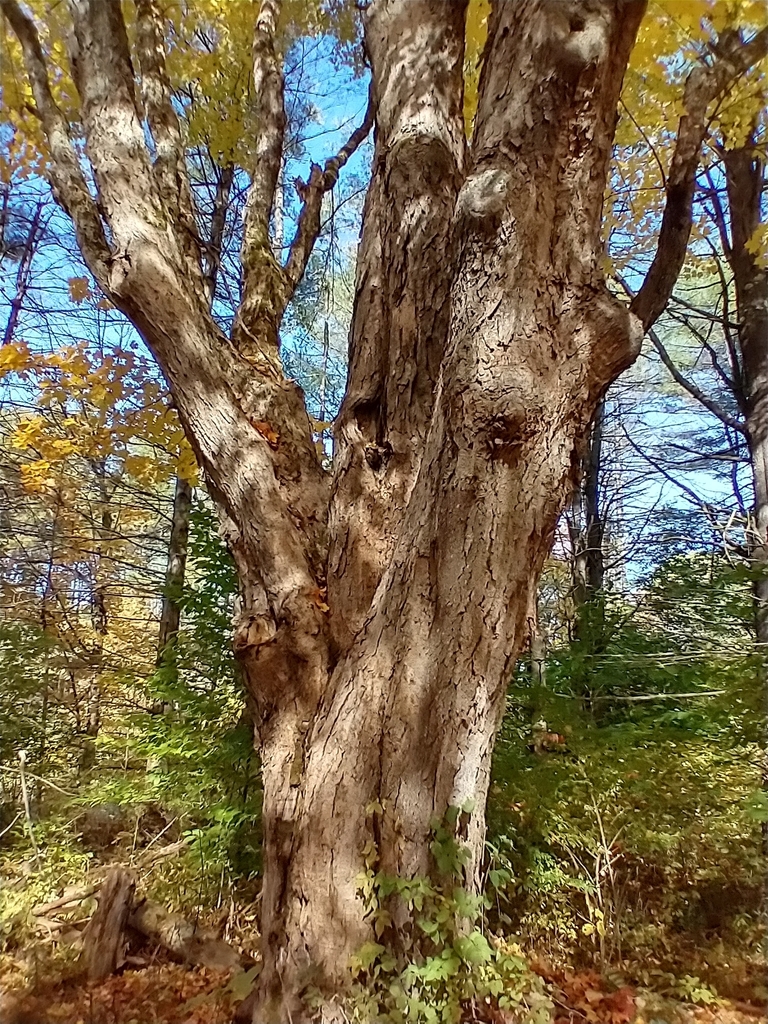
sugar maple
- Origin
- North America
- Part used
- Leaves, Seeds/fruits, Bark
- Tradition
- Traditional ethnobotany
Sugar maple, a great tree of the forests of the North American East, is above all known for its sweet sap, harvested by Indigenous peoples long before the arrival of European settlers. Beyond sugaring, the bark and leaves found a quiet place in folk traditional uses, passed down from generation to generation. This entry gathers this old knowledge, in the manner of an old herbalist's notebook.
Traditional uses
A soothing bark decoction
Sugar maple bark was traditionally boiled to prepare a decoction used for mild digestive discomfort. This folk use remains poorly documented scientifically but appears in several North American herbalist traditions.
An infusion for cough and cold
Leaves and bark were sometimes infused together to help with seasonal colds, more as a comforting hot drink than a targeted remedy.
Maple sap and sugar, a source of energy
The sap, harvested in spring and concentrated into syrup or sugar, traditionally provided a valuable source of energy and a tonic food for Indigenous communities during the cold season.
A soothing external use
Decoctions of bark or leaves were sometimes used as compresses to soothe superficial skin irritation, according to loosely formalized local folk uses.
Before you use it
This entry describes traditional and historical uses; it in no way replaces professional medical advice. Preparations made from bark or leaves are poorly documented scientifically: their use should remain occasional and cautious. Avoid self-medication in pregnant or breastfeeding women, young children, and people under medical treatment without the advice of a health professional. Make sure of the correct botanical identification of the tree before any harvesting, as some maple species can present different profiles.
The detailed notebook
- Prepared as a paste or decoction
- Traditional duration of use
- Known contraindications
- Related species and their uses
Where to find it
Partner herbalists — available with the detailed notebook.
Sources
Wikipedia