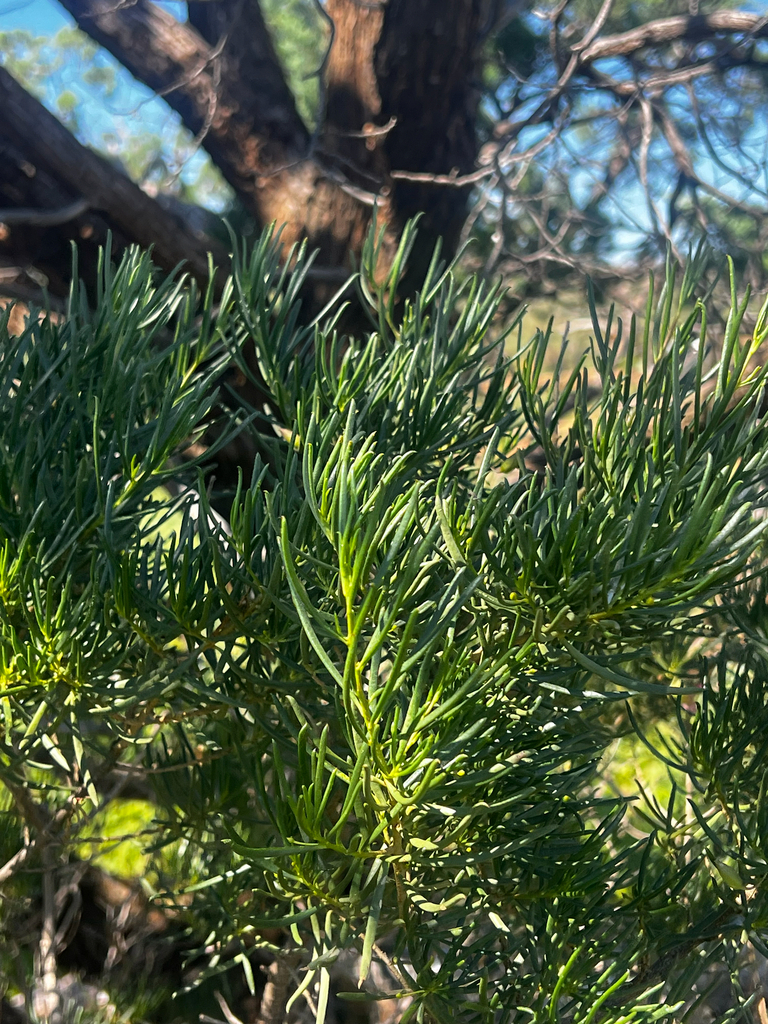
Eremophila alternifolia
- Origin
- Oceania
- Part used
- Leaves
- Tradition
- Traditional ethnobotany
In the arid lands of central and southern Australia, Aboriginal peoples have long recognized Eremophila alternifolia, a silvery, fragrant shrub, as a precious everyday ally. Sometimes called "emu bush" by settlers, this bush plant held a prized place among the traditional remedies passed down from generation to generation.
Traditional uses
Relief for the airways
The leaves, crushed and inhaled, or infused as a steam, were traditionally used to clear the airways during colds or ailments of the nose and throat.
Care for skin ailments
A leaf decoction was used as a wash or compress to soothe irritated skin, minor wounds, and certain skin ailments.
Easing pain and fevers
The leaves, as an infusion or applied as a warm compress, were traditionally used to ease feverish states and diffuse bodily pain.
Traditional fumigations
The burned foliage was used as a fumigation, both for its perceived air-purifying virtues and in certain Aboriginal ceremonial practices.
Before you use it
Eremophila species contain compounds (including essential oils and aromatic substances) whose composition and potential toxicity remain poorly documented scientifically; prolonged or concentrated internal use is discouraged without a professional's advice. Avoid any use during pregnancy or breastfeeding, and in young children, for lack of sufficient safety data. Do not use internally without having consulted a herbalist or health professional well acquainted with this species, which is uncommon in Europe. Reserve external use for small test areas, as certain volatile oils may irritate the skin or mucous membranes.
The detailed notebook
- Prepared as a paste or decoction
- Traditional duration of use
- Known contraindications
- Related species and their uses
Where to find it
Partner herbalists — available with the detailed notebook.
Sources
PFAF, Wikipedia