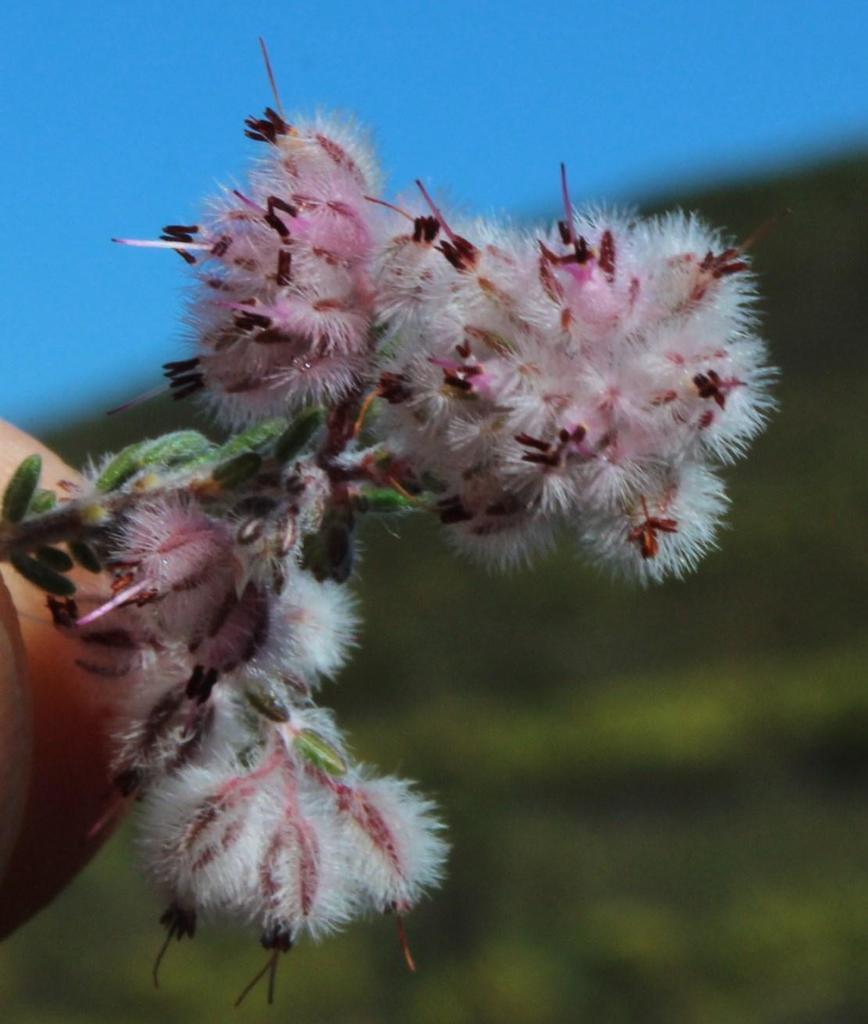
Eriocephalus
- Origin
- Africa
- Part used
- See detailed notebook
- Tradition
- Traditional ethnobotany
On the arid hills of the Cape, Eriocephalus — which Dutch settlers named "wilde roosmaryn" for its scent so reminiscent of European rosemary — has long accompanied the remedies of the Khoisan peoples and the earliest herbalists of southern Africa. This silvery shrub, resistant to the dry winds of the veld, was used in fumigations, infusions, and ointments to soothe ailments of body and spirit. Its fine, almost woolly foliage gives it the scientific name that literally means "wool head."
Traditional uses
Traditional easing of the nerves
The leaves were traditionally infused to promote relaxation at the end of the day, in a use similar to that of rosemary or chamomile.
Support during colds
A hot decoction, sometimes inhaled as steam, traditionally accompanied conditions of the upper respiratory tract.
Care of skin irritations
Infused twigs or a poultice were used to soothe irritated skin or minor wounds, according to South African folk uses.
Digestive comfort after meals
A light leaf tea was sometimes drunk to relieve digestive discomfort and bloating, in the oral tradition of the Cape.
What to know before use
A traditional use poorly documented by modern research: caution recommends reserving this plant for external or occasional use, under the advice of a professional. Not recommended for pregnant or breastfeeding women, as a precaution, in the absence of sufficient safety data. Do not confuse with other aromatic species of the South African veld, some of which are irritating or toxic. Avoid prolonged or high-dose use without the advice of a health professional or trained herbalist.
The detailed notebook
- Prepared as a paste or decoction
- Traditional duration of use
- Known contraindications
- Related species and their uses
Where to find it
Partner herbalists — available with the detailed notebook.
Sources
PFAF, Wikipedia