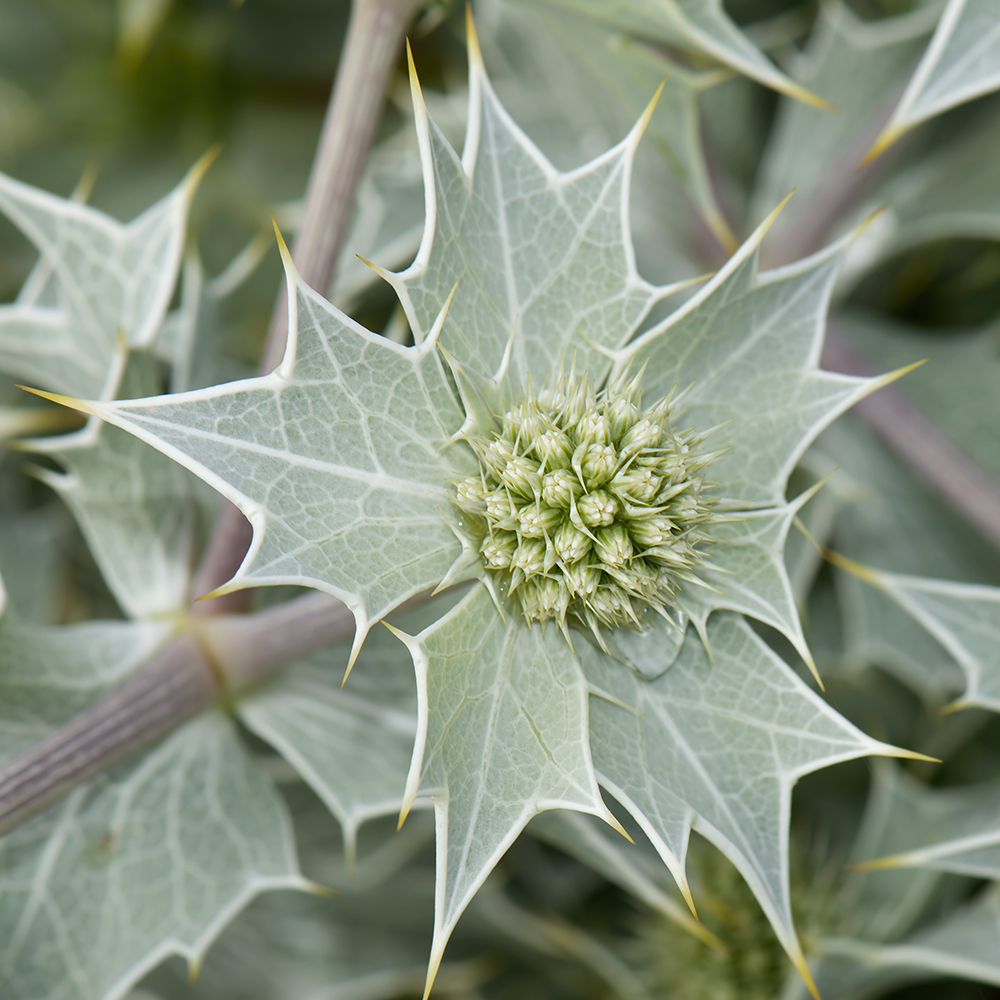
Eryngium maritimum
- Origin
- Europe
- Part used
- Whole plant, Root
- Tradition
- Traditional ethnobotany
On the dunes of the Atlantic and Mediterranean coasts, sea holly raises its bluish, spiny leaves, weathering salty winds and scorching sand. The ancients sometimes called it ‘blue thistle’ or ‘eryngo,’ and credited it since antiquity with digestive and depurative virtues. Its candied root was even once a prized medicinal treat on the English and French coasts.
Traditional uses
Digestive support
The root and the whole plant were traditionally used as a decoction to help with difficult digestion and stimulate the appetite.
A soothing remedy for the throat
Sea holly root teas were among the folk remedies meant to soothe coughing and respiratory irritation.
A traditional depurative plant
Considered a mild diuretic, eryngo was used in folk traditions to promote urinary elimination and ‘purify the blood.’
An old traditional use for women
Some old herbals mention a use of the root linked to women's conditions, but this indication remains poorly documented and should be considered with caution.
Before you use it
Avoid prolonged use without the advice of a healthcare professional, as modern safety data is limited. Not advised during pregnancy or breastfeeding, for lack of sufficient safety data. Do not confuse with other thorny coastal species when harvesting. If taking medication, seek advice before any regular use.
The detailed notebook
- Prepared as a paste or decoction
- Traditional duration of use
- Known contraindications
- Related species and their uses
Where to find it
Partner herbalists — available with the detailed notebook.
Sources
PFAF, Wikipedia