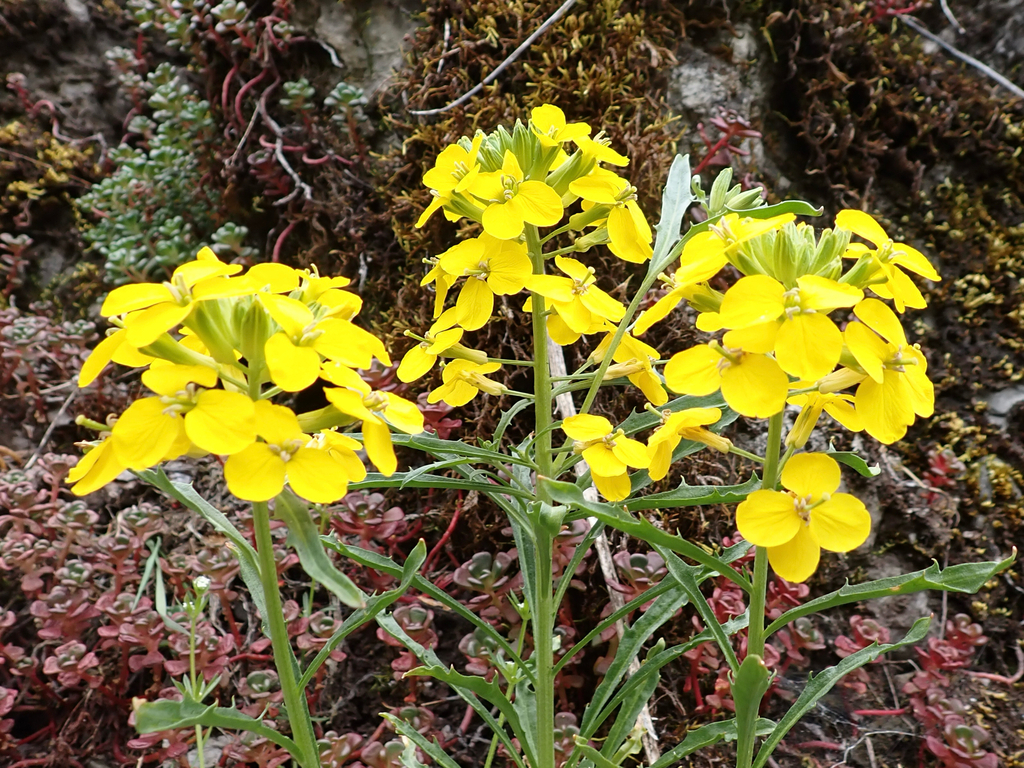
Erysimum capitatum
- Origin
- North America
- Part used
- Whole plant
- Tradition
- Traditional ethnobotany
On the high plains and rocky canyons of the North American West, Erysimum capitatum raises its orange-yellow spikes each spring. Indigenous nations, particularly in desert and mountain regions, knew this wild crucifer long before European botanists did, and credited it with both physical and symbolic virtues. Its common name, western wallflower, quietly evokes its familiar presence along trailsides.
Traditional uses
Traditional support for the throat
Some Indigenous communities used a preparation of the whole plant as a gargle or light infusion to soothe irritation of the throat and respiratory tract.
A heart tonic in folk tradition
Like other European Erysimum species, the plant was sometimes used in very small amounts as a traditional cardiac tonic, a use today reserved for expert hands owing to its content of cardiotonic glycosides.
A soothing external use
Applied externally as a poultice, the crushed whole plant was traditionally placed on irritated or slightly injured areas of skin.
A plant of ceremonial uses
Among several Indigenous peoples of the American West, the wild wallflower held a place in certain ritual and symbolic practices, more than in everyday domestic use.
Before you use it
This plant contains cardiotonic glycosides related to those of foxglove; unsupervised internal use poses a real risk to heart rhythm. Not advised during pregnancy or breastfeeding, in children, or in anyone undergoing cardiac or diuretic treatment, owing to possible interactions. Never improvise internal use: it is essential to consult a health professional or an experienced herbalist before any use other than occasional external application. Confusion with other wild crucifer species is possible; certain botanical identification is essential before any harvesting.
The detailed notebook
- Prepared as a paste or decoction
- Traditional duration of use
- Known contraindications
- Related species and their uses
Where to find it
Partner herbalists — available with the detailed notebook.
Sources
PFAF, Wikipedia