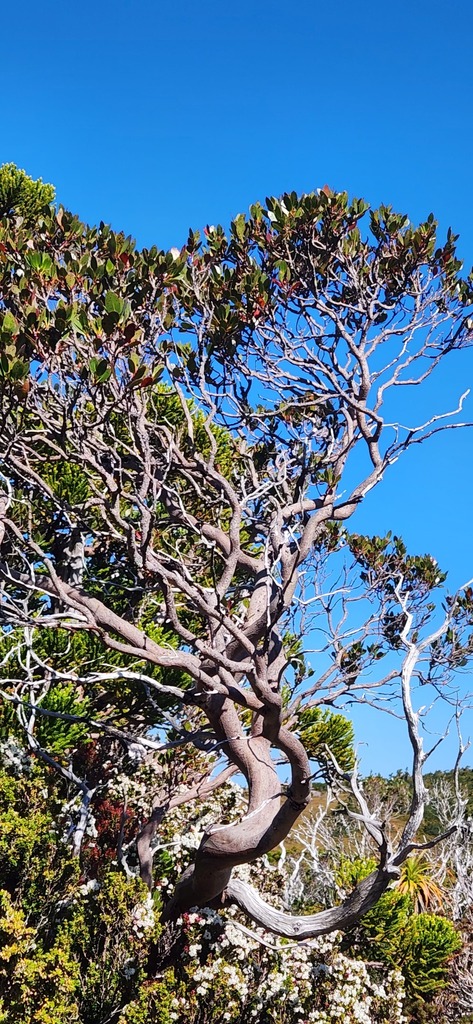
Eucalyptus vernicosa
- Origin
- Oceania
- Part used
- See detailed notebook
- Tradition
- Traditional ethnobotany
On the wind-battered heights of Tasmania, Eucalyptus vernicosa raises its glossy, leathery leaves, adapted to the harshest alpine moors. Less famous than its giant cousins, this small creeping shrub nonetheless shares the aromatic, balsamic reputation of the great eucalyptus family, long known to the Aboriginal peoples of Oceania.
Traditional uses
Inhalation to clear the airways
Like other eucalypts, its crushed leaves and their balsamic vapor were traditionally breathed in to relieve congested airways.
External use for minor irritations
The crushed leaves, or a compress made from them, were sometimes applied locally, according to traditional uses attributed to resinous-leaved eucalypts.
Traditional household fumigation
The resinous, fragrant foliage could be burned or diffused into the surrounding air, in the traditional spirit of purifying living spaces.
Before you use it
This species is poorly documented scientifically: its specific traditional use remains far less established than that of Eucalyptus globulus or radiata. Like many eucalypts, it may contain potent aromatic compounds (cineole and related substances) discouraged during pregnancy, in infants, and in people with asthma without medical advice. Never ingest a preparation from this plant without validation by a health professional or qualified herbalist, as the risk of oral toxicity has not been clearly ruled out for this particular species. Use by inhalation or skin application should remain occasional and cautious, stopping immediately in case of irritation.
The detailed notebook
- Prepared as a paste or decoction
- Traditional duration of use
- Known contraindications
- Related species and their uses
Where to find it
Partner herbalists — available with the detailed notebook.
Sources
PFAF, Wikipedia