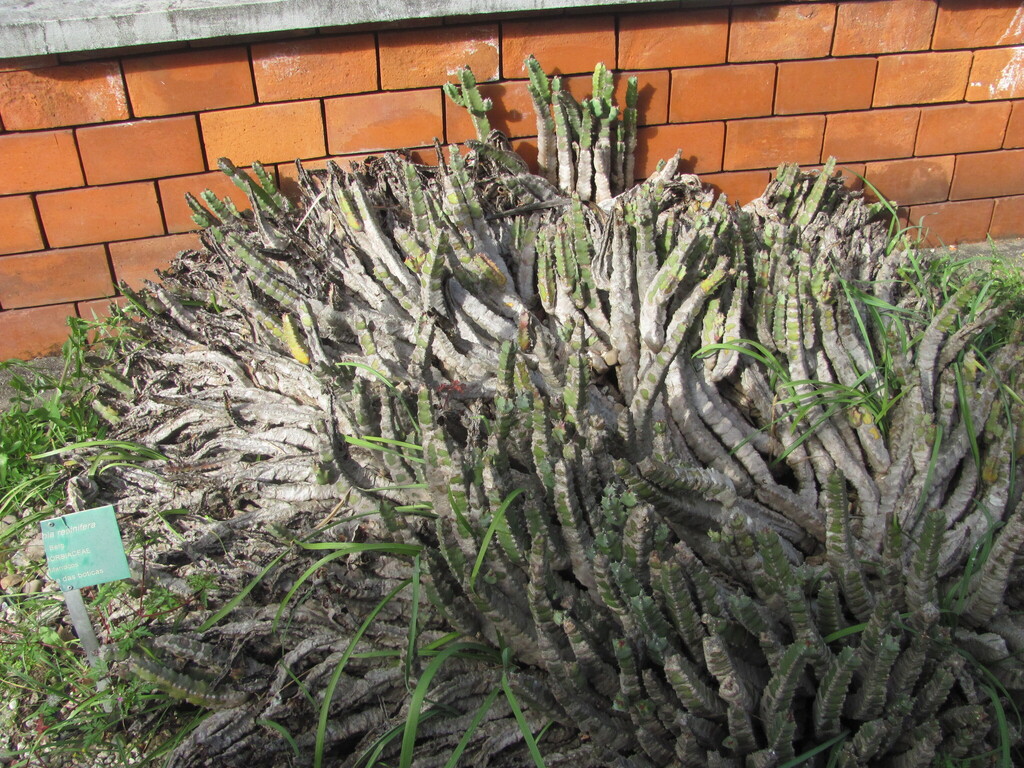
Resin Spurge
- Origin
- Africa
- Part used
- See detailed notebook
- Tradition
- Traditional ethnobotany
Native to the arid foothills of the Moroccan Atlas, resin spurge has been known since antiquity for its thick, burning latex, once harvested by Berber tribes and exported to European courts under the name euphorbium. This resin, extracted with great care, held a special place in ancient pharmacopeias, reserved for very limited external uses.
Traditional uses
Latex used in traditional cauterization
The dried latex, called euphorbium, was historically used in very small amounts to cauterize certain wounds or warts, due to its powerful irritant effect.
External vermifuge for livestock
In certain regions of the Maghreb, the diluted resin was traditionally used to treat external parasites on farm animals.
Component of rubefacient preparations
Mixed with fats, the resin went into traditional ointments intended to cause local redness, considered a counter-irritant.
Historical ingredient of official euphorbium
Described by ancient authors and then by European pharmacopeias until the 19th century, the resin was regarded as a rare and prized substance, but always handled with extreme parsimony.
What to know before use
The fresh latex is extremely irritating to the skin, mucous membranes, and particularly the eyes; any accidental contact requires immediate and thorough rinsing. This plant is toxic if ingested and must never be consumed in any form. It contains phorbol esters with irritant and potentially tumor-promoting properties; its traditional external use should only be considered after the advice of a qualified professional. Handling reserved for experienced individuals, and must be kept strictly out of reach of children and pets.
The detailed notebook
- Prepared as a paste or decoction
- Traditional duration of use
- Known contraindications
- Related species and their uses
Where to find it
Partner herbalists — available with the detailed notebook.
Sources
PFAF