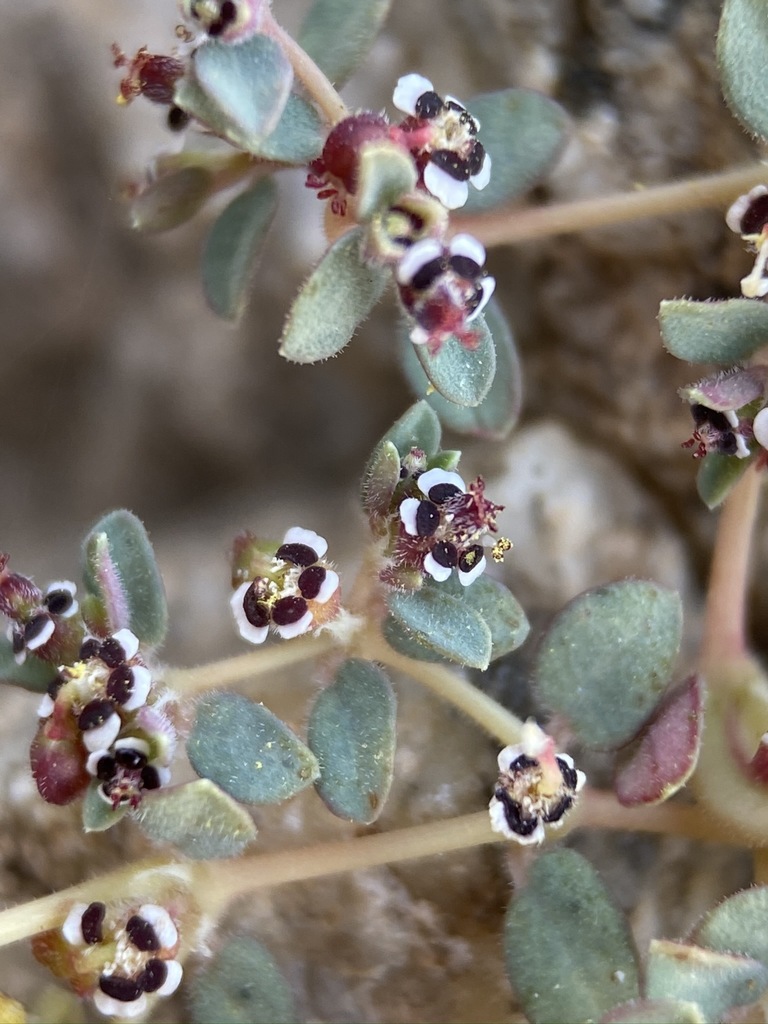
Euphorbia polycarpa
- Origin
- North America
- Part used
- Stem
- Tradition
- Traditional ethnobotany
A small creeping euphorbia of the arid lands of the American Southwest, Euphorbia polycarpa nestles discreetly among stones and sand. The Amerindian tribes of these desert regions knew its milky sap, used with caution for a few specific and well-defined purposes.
Traditional uses
Application to bites and skin ailments
The stem's latex was traditionally applied in very small amounts to insect bites or certain skin irritations, according to uses reported among the peoples of the Sonoran Desert.
Occasional use as a purgative
Some ethnobotanical sources mention an occasional use of the dried or diluted latex as a purgative, a use that is nonetheless poorly documented and to be handled with great caution.
Traditional treatment of warts
As with other euphorbias, the sap was sometimes placed directly on warts, a practice common to several species of the genus Euphorbia in North American folk traditions.
Before you use it
The latex of this euphorbia is irritating to the skin and mucous membranes; avoid any contact with the eyes. Internal use is strongly discouraged without the supervision of a health professional, owing to the latex's potential toxicity. To be avoided in pregnant or breastfeeding women, as well as young children. Do not ingest the plant without the advice of a herbalist or doctor experienced in its use.
The detailed notebook
- Prepared as a paste or decoction
- Traditional duration of use
- Known contraindications
- Related species and their uses
Where to find it
Partner herbalists — available with the detailed notebook.
Sources
Wikipedia