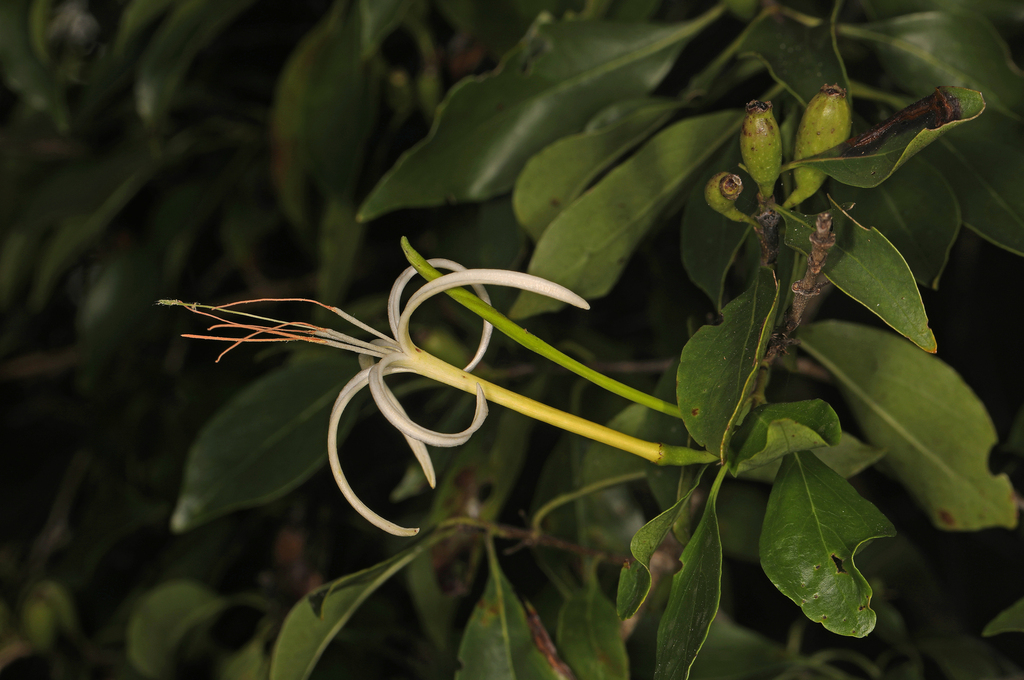
Exostema caribaeum
- Origin
- North America
- Part used
- See detailed notebook
- Tradition
- Traditional ethnobotany
On Caribbean shores and the warm lands of Central America, the bitter bark of Exostema caribaeum, sometimes called "Caribbean quinine," was long used by local healers as a substitute for true cinchona bark. Colonial herbalists' notebooks preserve its record as a fever-reducing remedy and bitter tonic, passed down through generations in the regions where this shrub grew.
Traditional uses
A traditional fever remedy
The bitter bark was traditionally used as a decoction to accompany feverish states, in the manner of cinchona bark, for which it was historically considered a local substitute.
A digestive bitter tonic
Owing to its strong bitterness, the bark was used to stimulate appetite and support sluggish digestion, according to the traditional practices of Caribbean herbalists.
Support for intestinal troubles
Some folk traditions report the use of the bark for digestive disorders and fevers accompanied by bowel troubles.
A traditional local antimalarial remedy
In certain regions of Central America and the Caribbean, the plant is among the folk remedies historically associated with periodic fevers, though this use has not been scientifically validated.
Before you use it
A plant poorly documented by modern research: its use must absolutely be supervised by a health professional or an experienced herbalist. The bitter bark may present toxicity at high doses or with prolonged use; never exceed light, occasional preparations. Not advised for pregnant or breastfeeding women, or young children, for lack of sufficient safety data. Never use as a substitute for a recognized antimalarial or fever-reducing treatment; consult a doctor in cases of persistent fever.
The detailed notebook
- Prepared as a paste or decoction
- Traditional duration of use
- Known contraindications
- Related species and their uses
Where to find it
Partner herbalists — available with the detailed notebook.
Sources
PFAF, Wikipedia