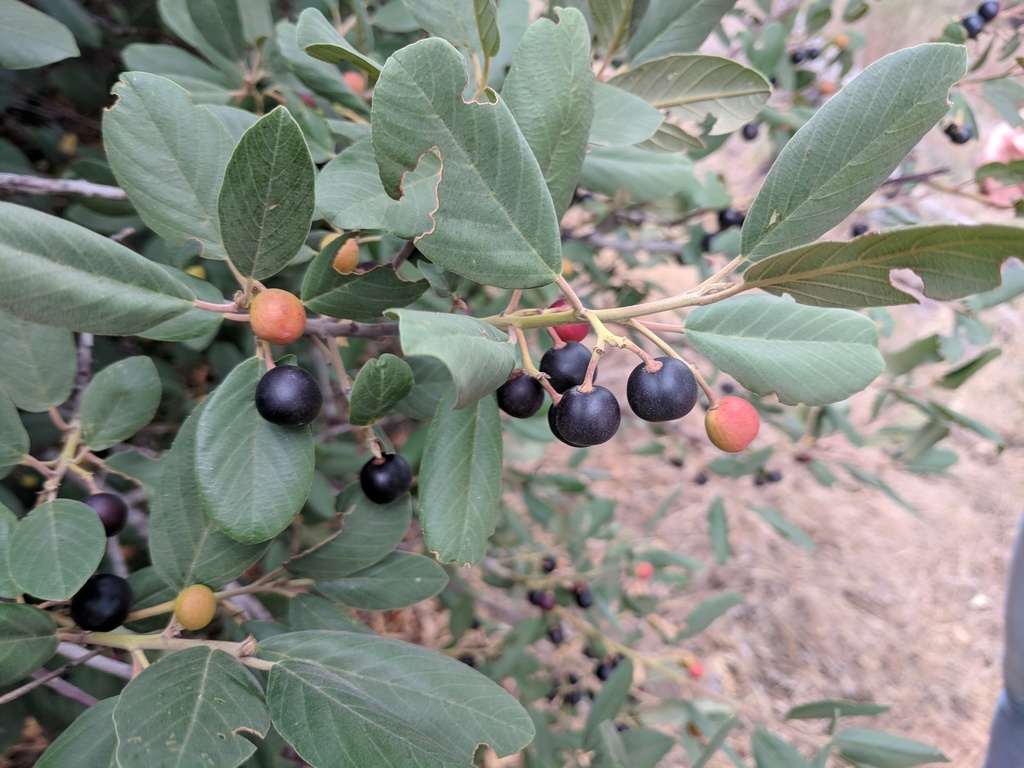
Frangula californica
- Origin
- North America
- Part used
- See detailed notebook
- Tradition
- Traditional ethnobotany
California buckthorn, a western cousin of the famous cascara sagrada (Frangula purshiana), grew in the understory and humid canyons of the Pacific coast. The Indigenous peoples of the region, notably within Californian traditions, had long known the purgative properties of its bark, reserved for careful, occasional use.
Traditional uses
Traditional laxative bark
The dried, aged bark was used in small amounts as a stimulant laxative for occasional constipation, in the manner of cascara sagrada.
A bitter tonic for the digestive tract
In infinitesimal doses, the bitter bark entered into certain traditional preparations intended to stimulate digestion and bowel movement.
Skin application in decoction
Some local traditions report the use of diluted bark decoctions as an external wash, although this use is poorly documented and marginal.
Wood and bark in local craft
Beyond internal use, the wood and bark of California buckthorn found a place in various utilitarian uses among the Indigenous peoples of the West Coast.
Before you use it
Fresh bark is strongly irritating to the digestive mucosa and causes cramps and severe diarrhea; it must absolutely be dried and aged for at least a year before any traditional use. Internal use is not advised during pregnancy, breastfeeding, in children, or in cases of inflammatory bowel disease (colitis, Crohn's disease). Prolonged use beyond a few days can lead to bowel dependency and potassium loss; the advice of a health professional is essential before any use. Possible interactions with cardiac, diuretic, or anticoagulant treatments; to be avoided without medical supervision.
The detailed notebook
- Prepared as a paste or decoction
- Traditional duration of use
- Known contraindications
- Related species and their uses
Where to find it
Partner herbalists — available with the detailed notebook.
Sources
Wikipedia