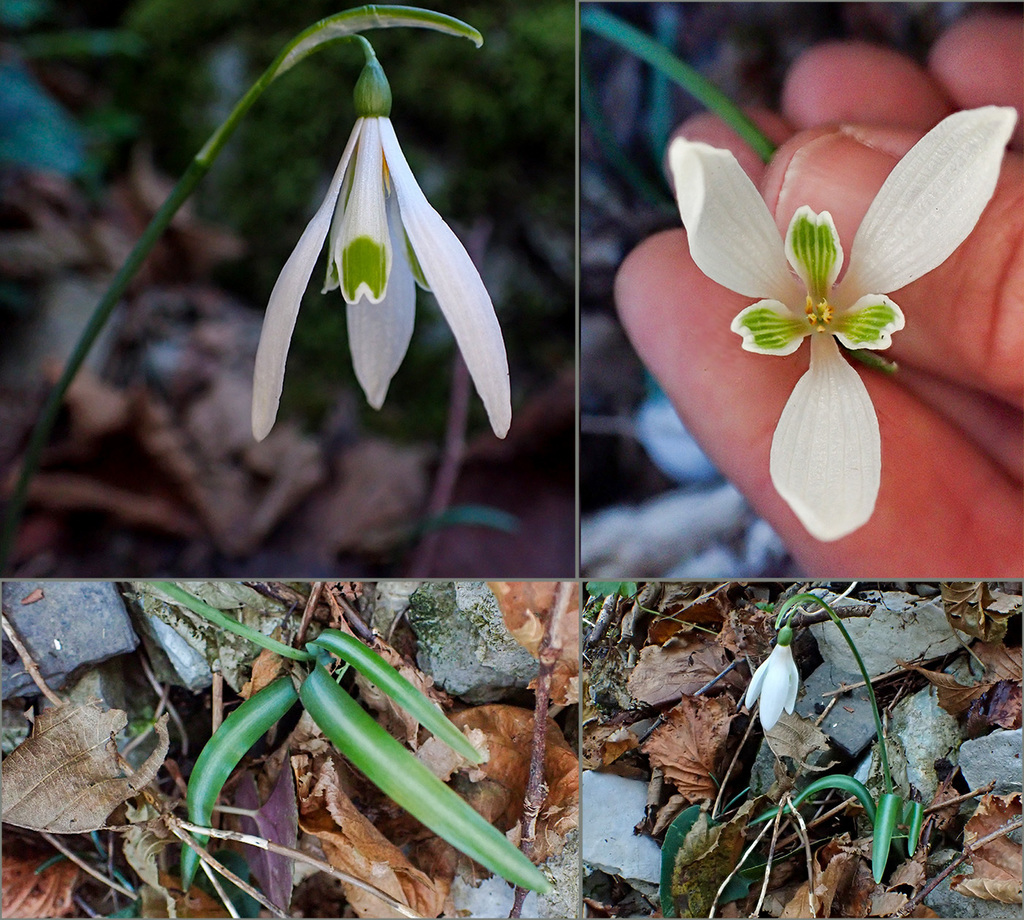
Galanthus nivalis
- Origin
- Europe
- Part used
- See detailed notebook
- Tradition
- Traditional ethnobotany
The snowdrop of European woodlands, Galanthus nivalis announces the end of winter with its early white bells. Though its delicate silhouette has fed many a folk legend, the plant belongs to a botanical category quite apart: that of species monitored for their alkaloids, not that of garden or kitchen herbs. It appears here more as a matter of historical and pharmacological knowledge than as a folk remedy.
Traditional uses
Memory research
The snowdrop bulb served as the starting point for isolating galantamine, an alkaloid studied for its action on certain cognitive functions; this use belongs exclusively to modern, medically supervised pharmacology, not to traditional domestic herbal medicine.
A folk remedy from Eastern Europe
In certain traditions of the Caucasus and the Balkans, bulb-based preparations were historically used empirically against nerve pain, but these uses were never common herbal practice, due to the plant's toxicity.
A herald of renewal
Far more widespread as an ornamental plant and a symbol of the awakening spring, the snowdrop has mainly held a cultural and poetic place in European traditions, celebrated for its early bloom rather than for any internal use.
Before you use it
All parts of the plant, particularly the bulb, contain toxic alkaloids and must never be ingested without strict medical supervision. Ingestion can cause nausea, vomiting, excessive salivation, and neurological and cardiac disturbances. The plant is strictly not advised for pregnant or breastfeeding women, children, or those on medication (risk of interactions). Never confuse it with other edible woodland bulbs (such as wild garlic) when foraging.
The detailed notebook
- Prepared as a paste or decoction
- Traditional duration of use
- Known contraindications
- Related species and their uses
Where to find it
Partner herbalists — available with the detailed notebook.
Sources
PFAF, Wikipedia