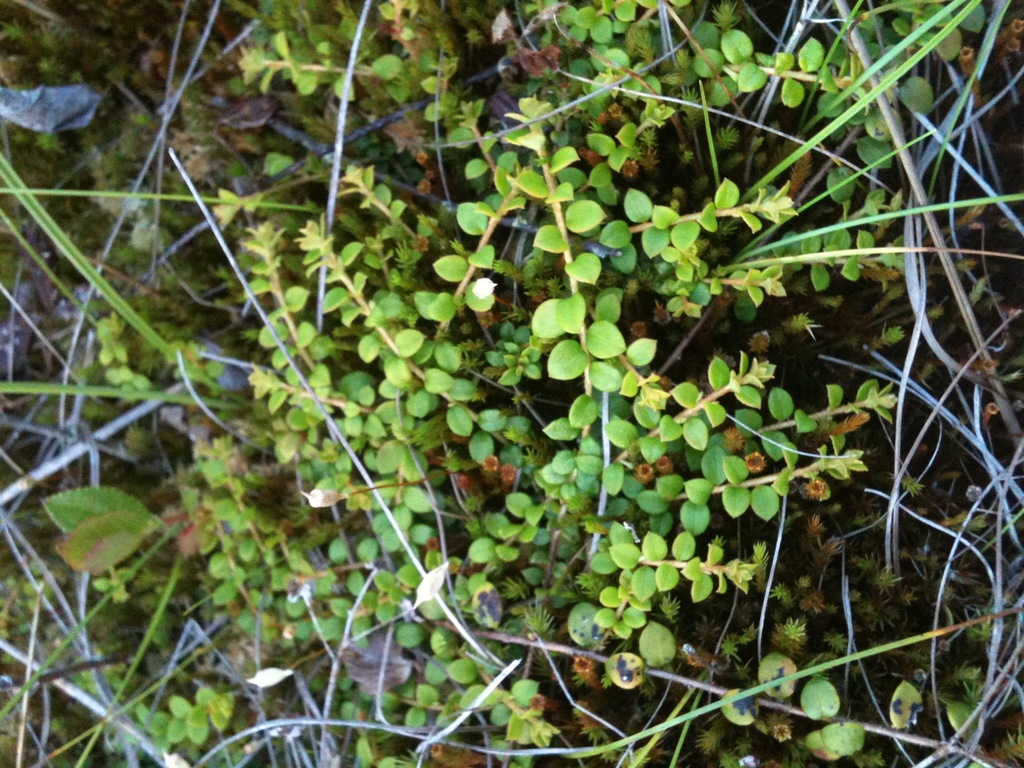
Gaultheria hispidula
- Origin
- North America
- Part used
- Leaves, Seeds/fruits
- Tradition
- Traditional ethnobotany
A small creeping plant of the cold forests of North America, creeping snowberry — sometimes called “dwarf wintergreen” or “moxie plum” — carpeted the floor of fir groves where Indigenous peoples and woodsmen knew it by its wintergreen scent. Its white berries and unassuming leaves made it both a supplementary food and a plant of traditional use, passed down through the seasons.
Traditional uses
Traditional digestive infusion
The dried leaves were infused to help with digestion after meals, according to North American folk uses passed down orally.
Support for the respiratory tract
Certain Indigenous traditions used a light leaf decoction to soothe the throat and help with seasonal colds.
A traditional use against pain
Like other gaultherias rich in salicylate compounds, this species was used externally for its warming effect, traditionally associated with relieving muscle tension.
A small tonic fruit of the understory
The berries, subtly fragrant, were eaten fresh or dried by travelers and trappers as a supplementary food in the forest.
Before you use it
The natural compounds related to methyl salicylate present in the foliage make any internal use or large quantities potentially risky: seek the advice of a health professional before any regular use. Not advised for pregnant or breastfeeding women, or young children, as a precaution. To be avoided in cases of anticoagulant treatment or known sensitivity to aspirin, owing to possible interactions. Never use essential oil possibly drawn from related plants without dilution and specialist advice: it is highly concentrated and can be toxic.
The detailed notebook
- Prepared as a paste or decoction
- Traditional duration of use
- Known contraindications
- Related species and their uses
Where to find it
Partner herbalists — available with the detailed notebook.
Sources
Wikipedia