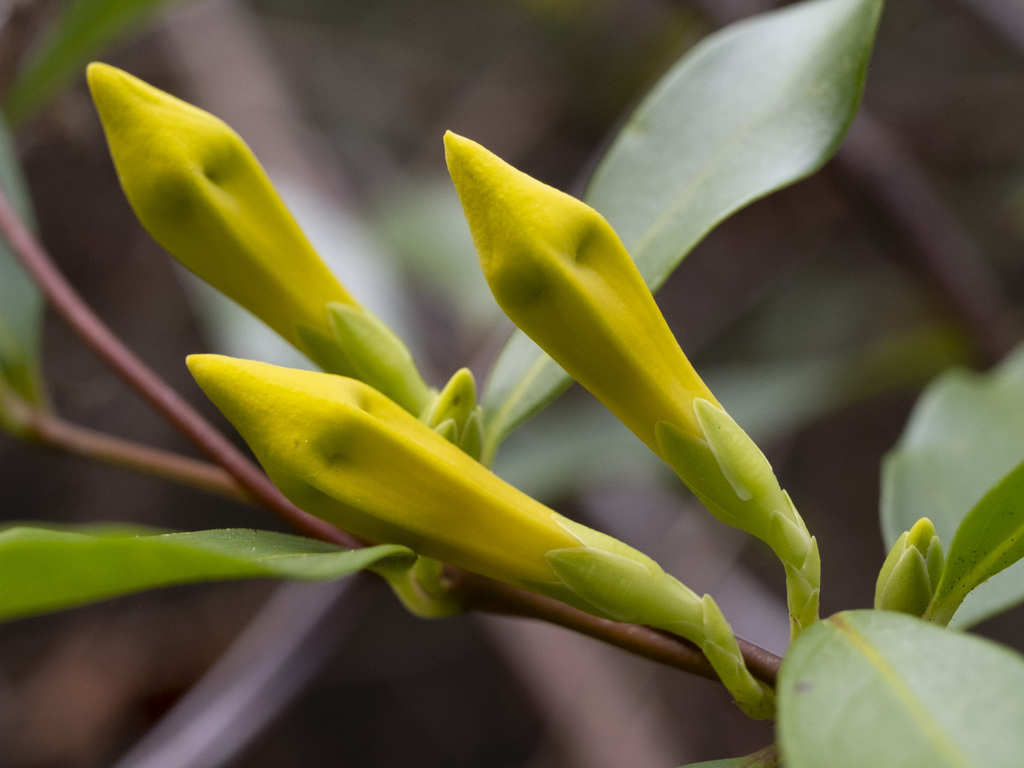
Gelsemium sempervirens
- Origin
- North America
- Part used
- See detailed notebook
- Tradition
- Traditional ethnobotany
Carolina jasmine, a fragrant vine of the understory of southeastern North America, early fascinated botanists both for the beauty of its yellow flowers and for its danger. Amerindian healers and later the eclectic physicians of the nineteenth century made it a feared remedy, reserved for experienced hands. Today, Gelsemium belongs above all to the history of pharmacopoeia and to homeopathic materia medica.
Traditional uses
Easing nervousness
American eclectic medical tradition credited Gelsemium with a calming action on states of nervous agitation and apprehension, in very measured use.
Fevers and neuralgia
The root was traditionally used in North America against feverish states accompanied by aches, as well as against certain facial neuralgias.
Support for respiratory ailments
Nineteenth-century practitioners sometimes turned to it for spasmodic coughs and flu-like ailments, always at an infinitesimal dose.
A base for homeopathic preparations
Gelsemium is today known above all as a homeopathic source traditionally used for stage fright and anticipatory anxiety.
Before you use it
A highly toxic plant: all parts, particularly the root, contain alkaloids (gelsemine) that can cause serious neurological and respiratory disturbances, even in small amounts. Raw use is strongly discouraged without the supervision of a qualified professional; never prepare a decoction or tincture yourself from the fresh plant. Contraindicated in pregnant or breastfeeding women, children, and in cases of preexisting heart or respiratory conditions. Do not combine with sedatives, central nervous system depressants, or other alkaloid-containing plants without medical advice, owing to the risk of severe interactions.
The detailed notebook
- Prepared as a paste or decoction
- Traditional duration of use
- Known contraindications
- Related species and their uses
Where to find it
Partner herbalists — available with the detailed notebook.
Sources
PFAF