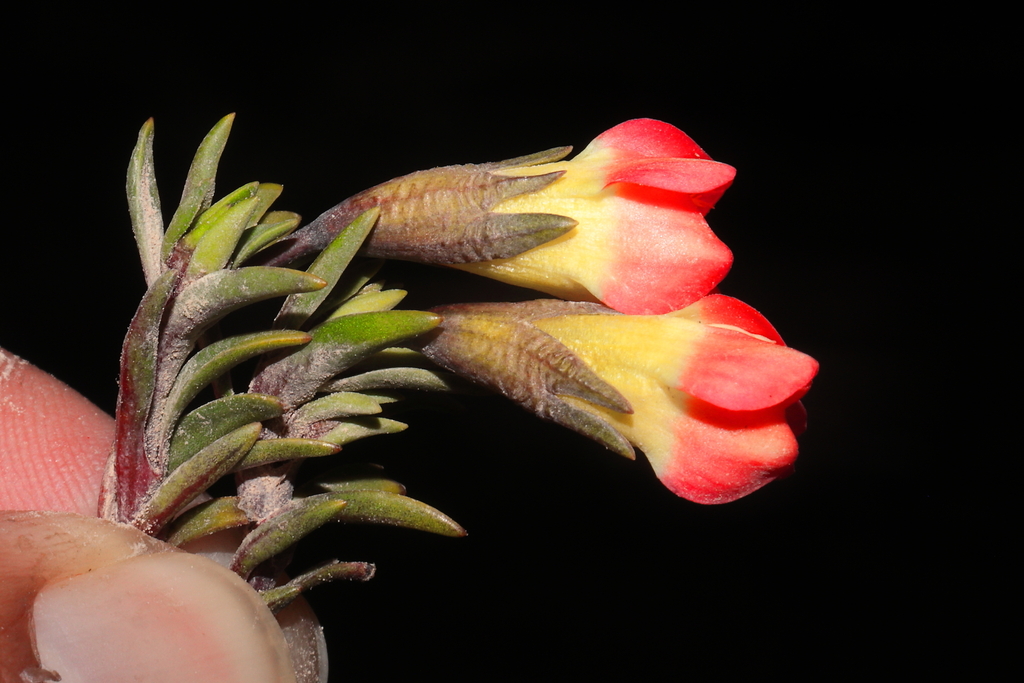
Gentianella nitida
- Origin
- South America
- Part used
- Whole plant, Root
- Tradition
- Traditional ethnobotany
In the arid heights of the Andean cordillera, where the air grows thin, grows Gentianella nitida, a humble flower of the puna that highland healers long considered a remedy for cold and altitude. Its characteristic bitterness, the signature of gentians, secured it a place in the traditional uses of Andean peoples as a tonic and digestive.
Traditional uses
Traditional digestive support
The very bitter whole plant was used as an infusion to stimulate appetite and aid digestion, following the traditional practices of Andean herbalists.
A fortifier for high altitudes
This gentian was credited with tonic and fortifying properties, particularly to help the body adapt to the rigors of life at altitude.
Traditional use against mild fevers
Root decoction was traditionally used to accompany feverish states and chills, according to the folk pharmacopoeia of the Andean regions.
Traditional use linked to the female cycle
Some local traditions report a use of this plant in connection with menstrual troubles, a use that nonetheless remains poorly documented and should be approached with caution.
What to know before use
A traditional use poorly documented in Western scientific literature: caution and the advice of a health professional are recommended before any use. To be avoided in pregnant or breastfeeding women, owing to traditional uses suggesting a possible effect on the female cycle. Very bitter plants of the gentian family can, at high doses, cause digestive upset or headaches. Do not use in children without medical advice, for lack of sufficient data on this particular species.
The detailed notebook
- Prepared as a paste or decoction
- Traditional duration of use
- Known contraindications
- Related species and their uses
Where to find it
Partner herbalists — available with the detailed notebook.
Sources
PFAF, Wikipedia