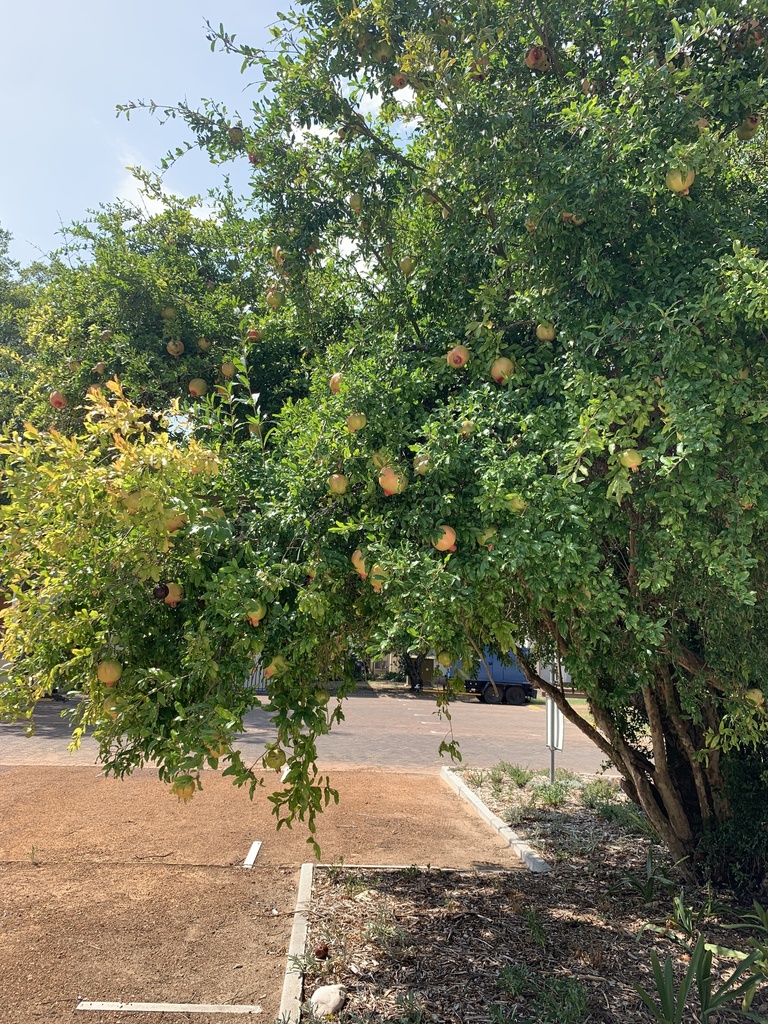
Pomegranate
- Origin
- Middle East
- Part used
- See detailed notebook
- Tradition
- Traditional ethnobotany
The pomegranate, native to the Persian lands and the Middle East, has accompanied humankind since antiquity, both in gardens and in folk pharmacopoeia. Its ruby-colored fruits and bitter bark were, from Mesopotamia to the Mediterranean, associated with vitality and longevity. It appears in ancient texts as a symbol of fertility and an everyday remedy.
Traditional uses
Traditional digestive support
The fruit's peel and pomegranate juice were traditionally used to soothe minor digestive upset and tighten tissues, according to Middle Eastern folk uses.
Traditional gargles
The juice or a decoction of the fruit's peel was used as a gargle to soothe the throat and gums, a use reported in several Mediterranean and Middle Eastern traditions.
Traditional skin care
The crushed peel and leaves went into local preparations applied to the skin for their astringent properties, recognized empirically.
A tonic, nourishing fruit
The fresh fruit, rich in antioxidants, was traditionally eaten as a tonic food, associated with supporting general vitality in Middle Eastern cultures.
Before you use it
The bark of the root and trunk contains potentially toxic alkaloids (pelletierine) and must never be used without supervision by a qualified professional. Not advised during pregnancy and breastfeeding, as pomegranate bark has historically served powerful, non-trivial deworming uses. Pomegranate juice may interact with certain medications, notably those metabolized by the liver (anticoagulants, certain cholesterol treatments): seek the advice of a pharmacist or doctor. In case of doubt, ongoing treatment, or a fragile constitution, consult a health professional before any use of the fruit beyond food.
The detailed notebook
- Prepared as a paste or decoction
- Traditional duration of use
- Known contraindications
- Related species and their uses
Where to find it
Partner herbalists — available with the detailed notebook.
Sources
PFAF