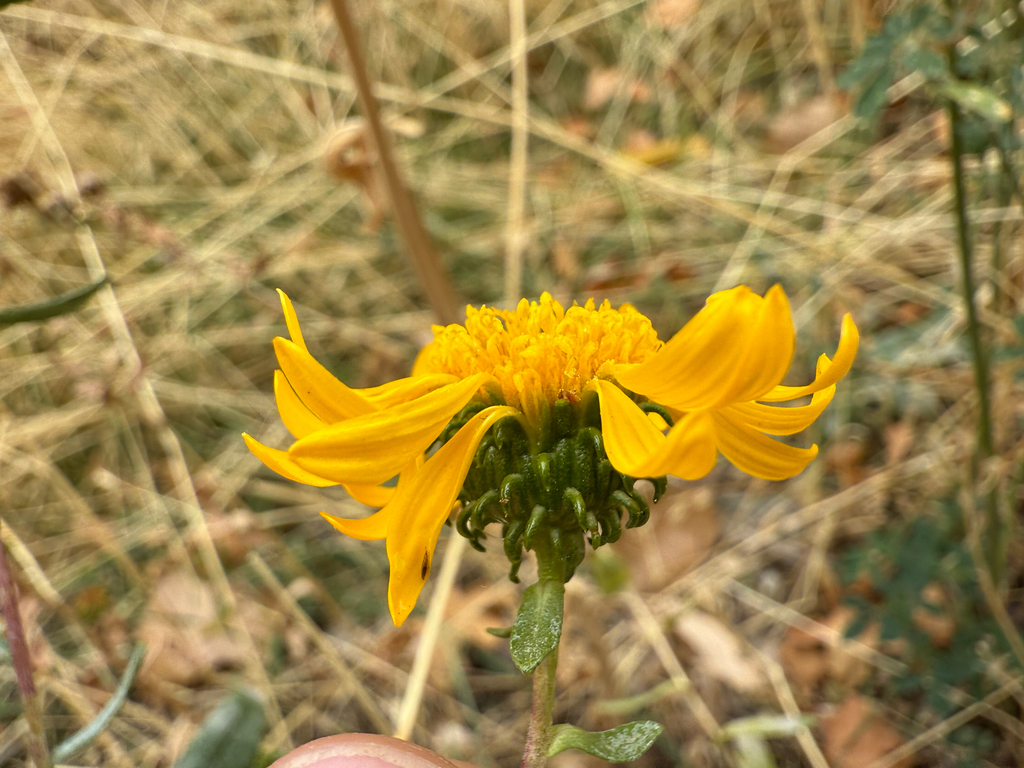
Grindelia squarrosa
- Origin
- North America
- Part used
- Flowers
- Tradition
- Traditional ethnobotany
On the arid plains of North America, Grindelia raises its resinous yellow flowers at the height of summer. The tribes of the Great Plains, notably the Sioux and Cheyenne, knew its virtues well, later passed on to settlers and pioneers. This drought-resistant plant was long a field remedy for skin and respiratory ailments.
Traditional uses
Soothing skin irritation
The resin of the flowers was traditionally applied to skin rashes, particularly those caused by contact with poison ivy. It was credited with soothing virtues on irritated, weeping skin.
Support for coughing
Used as an infusion by Amerindian healers and later by nineteenth-century eclectic physicians, grindelia traditionally accompanied bouts of coughing and bronchial congestion.
Compresses for stings and minor burns
Infused flowers were also used as compresses to calm insect stings and small superficial burns.
A traditional use as a bitter tonic
More rarely, a light decoction was used as a traditional bitter to support digestion, a use less documented than the preceding ones.
Before you use it
A plant containing resinous compounds and traces of selenium absorbed from the soil: prolonged or high-dose use is discouraged. Contraindicated in pregnant or breastfeeding women, for lack of sufficient data. May interact with certain cardiac or diuretic treatments; seek the advice of a health professional before any internal use. Reserved for occasional external use or for internal use supervised by a qualified herbalist or doctor.
The detailed notebook
- Prepared as a paste or decoction
- Traditional duration of use
- Known contraindications
- Related species and their uses
Where to find it
Partner herbalists — available with the detailed notebook.
Sources
PFAF, PubMed, Wikipedia