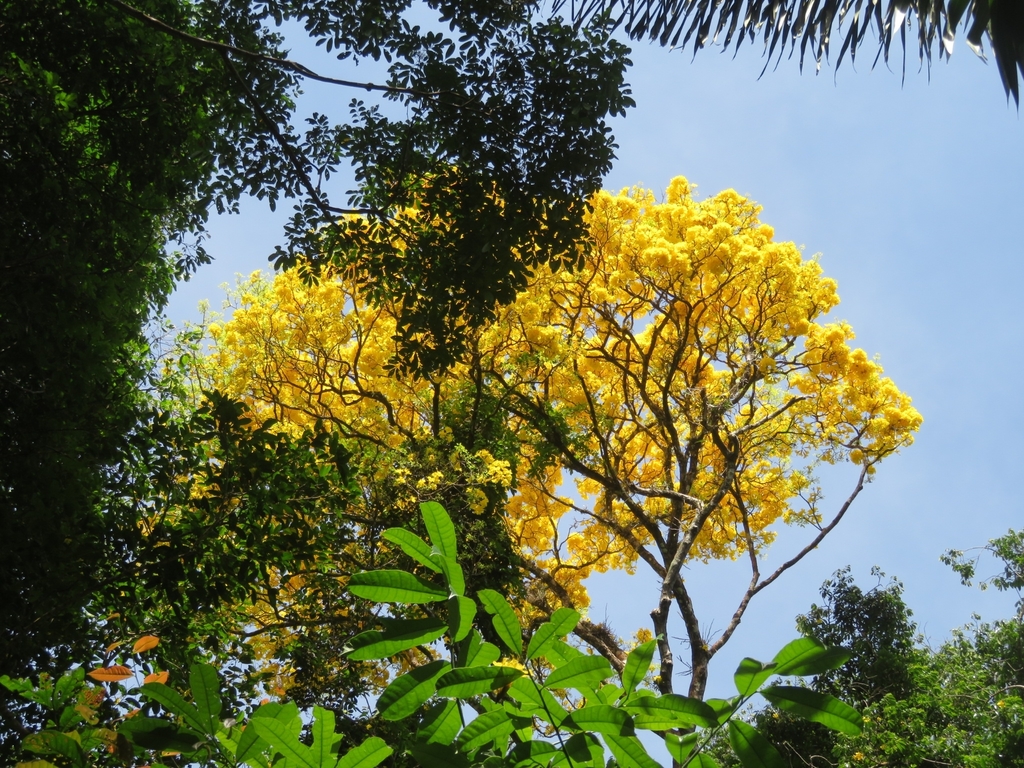
Handroanthus serratifolius
- Origin
- South America
- Part used
- See detailed notebook
- Tradition
- Traditional ethnobotany
Beneath the canopies of South America, the tree known as the yellow Ipê or Pau d'Arco puts on a dazzling bloom each year that heralds the dry season. Its inner bark, bitter and fibrous, has for generations been harvested by peoples of the tropical forest and used in the folk pharmacopoeias of Brazil and neighboring countries. The old herbalist kept it carefully, knowing its preparation was lengthy and its use called for discernment.
Traditional uses
Traditional support for the body
The inner bark of Pau d'Arco was traditionally consumed as a decoction as a general fortifier, particularly during cool seasons or periods of fatigue.
A digestive bitter use
Its pronounced bitterness made it a folk remedy to accompany difficult digestion, in the manner of the great traditional bitter plants.
Traditional skin application
Bark decoctions or compresses were applied locally to the skin in certain South American folk traditions, for minor superficial skin discomforts.
Traditional use against joint discomfort
In Brazilian folk pharmacopoeias, inner bark decoction was drunk to accompany joint pain and everyday inflammatory states.
What to know before use
Not recommended for pregnant or breastfeeding women, owing to active compounds (including lapachol) whose effects are not established in this context. Not suitable for prolonged use without the advice of a health professional, as cases of digestive and blood disorders have been reported at high doses. Possible interactions with anticoagulant or antiplatelet treatments; seek medical advice if under ongoing treatment. To be avoided in children and in cases of coagulation disorders, as the bark contains active naphthoquinones requiring caution.
The detailed notebook
- Prepared as a paste or decoction
- Traditional duration of use
- Known contraindications
- Related species and their uses
Where to find it
Partner herbalists — available with the detailed notebook.
Sources
PFAF