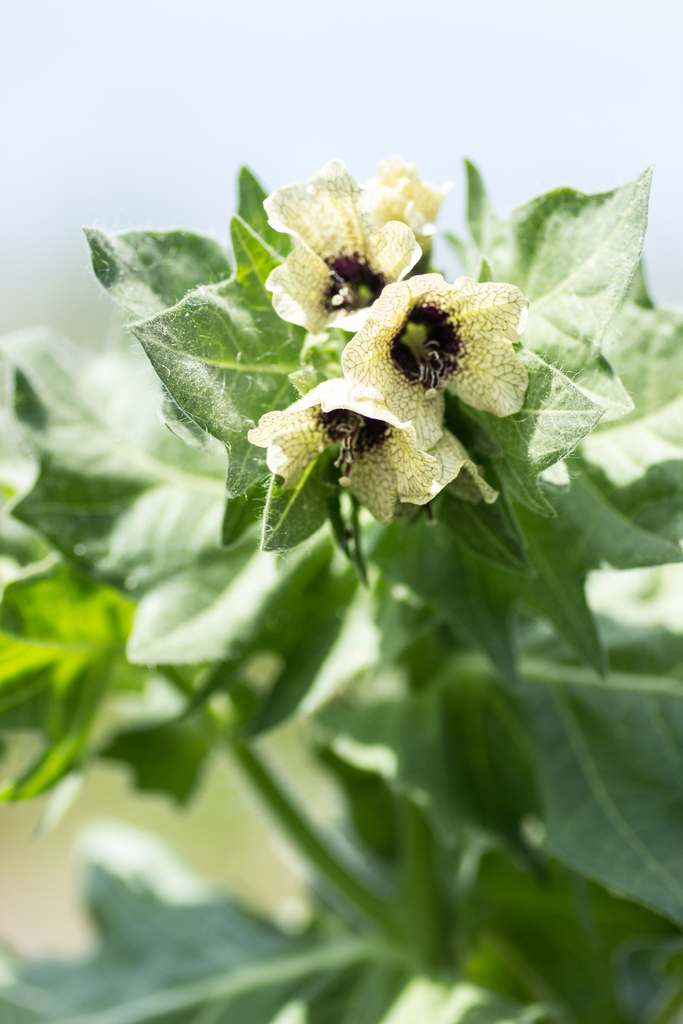
Hyoscyamus niger
- Origin
- Europe
- Part used
- Leaves, Flowers
- Tradition
- Traditional ethnobotany
Black henbane, once nicknamed the "numbing herb," has accompanied European herbalist traditions since antiquity, mentioned by Dioscorides and the apothecaries of the Middle Ages. A plant of murky reputation, half remedy and half poison, it was long reserved for the expert hands of healers and pharmacists. Today it belongs above all to the history of pharmacopoeia rather than to household use.
Traditional uses
Traditional relief of spasms
Old texts report the use of henbane to calm cramps and digestive spasms, owing to antispasmodic properties recognized by traditional medicine.
Traditional pain relief
Used externally, the plant was applied to ease joint and nerve pain, notably in the form of ointments or poultices.
Old sedative use
Henbane was among the so-called "soporific" plants of the Middle Ages, used together with other nightshades to promote sleep or anesthesia before rudimentary surgical procedures.
Traditional fumigation for coughs
The dried leaves were sometimes smoked or used as a fumigation to relieve spasmodic respiratory ailments, a practice now abandoned because of the risks involved.
Before you use it
A strongly toxic plant containing tropane alkaloids (hyoscyamine, scopolamine); never consume without the supervision of a qualified professional. Formally contraindicated during pregnancy and breastfeeding, as well as in children. Risk of serious interactions with many medications, particularly those for cardiac, psychiatric, or anticholinergic use. Regulated use: black henbane is classified among poisonous plants and its sale is regulated in France.
The detailed notebook
- Prepared as a paste or decoction
- Traditional duration of use
- Known contraindications
- Related species and their uses
Where to find it
Partner herbalists — available with the detailed notebook.
Sources
PFAF, Wikipedia