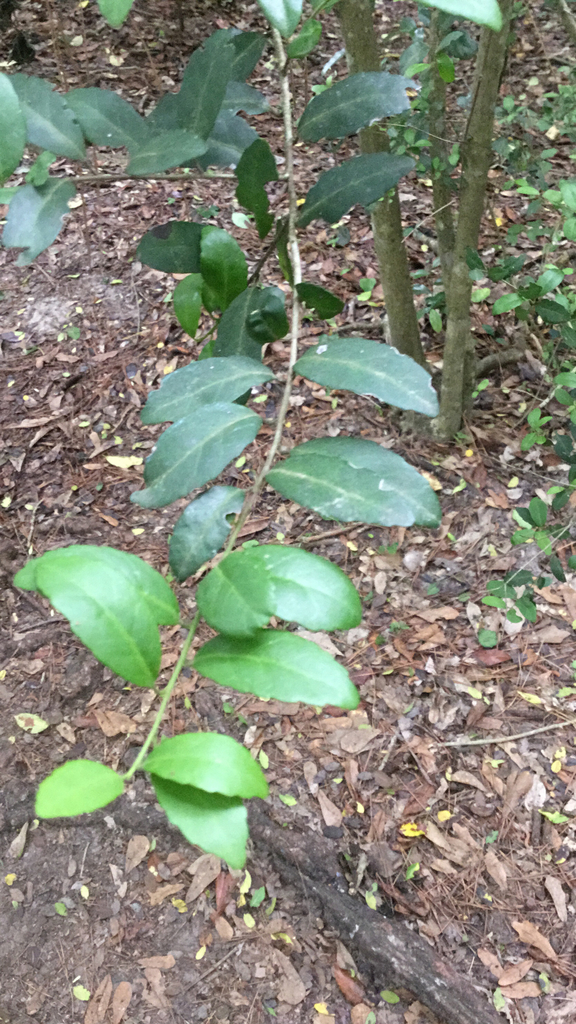
Ilex vomitoria
- Origin
- North America
- Part used
- See detailed notebook
- Tradition
- Traditional ethnobotany
Along the shores and coastal forests of the southeastern United States grows Yaupon, a holly with a misleading Latin name — vomitoria — inherited from an ancient ceremonial use misunderstood by early European observers. The Indigenous peoples of the American Southeast, notably the Creek, Timucua, and Cherokee nations, prepared from it a strong black beverage called "black drink," consumed during gatherings and ritual purifications. The only caffeinated plant native to the North American continent, it holds a singular place in the plant traditions of this territory.
Traditional uses
A traditional stimulant drink
The roasted leaves were infused to produce a caffeinated drink, consumed to support alertness and endurance during long ceremonies or journeys.
The ceremonial "black drink"
Prepared in large quantities and drunk collectively during councils or ceremonies, this black beverage was associated with physical and spiritual purification among several peoples of the Southeast.
A traditional emetic use
Consumed in large quantities, the beverage traditionally induced ritualized vomiting, considered a means of cleansing the body — the use behind the plant's botanical name.
A drink of conviviality and hospitality
Outside of ceremonies, a lighter preparation of roasted yaupon served as a shared everyday drink, in the manner of a tea or coffee.
Before you use it
Rich in caffeine: to be avoided in cases of sensitivity to stimulants, heart conditions, anxiety, or insomnia, and to be limited in pregnant or breastfeeding women. Concentrated or large-quantity preparations can cause nausea and vomiting, an effect historically sought but not to be reproduced without supervision. Possible interactions with stimulant medications or those affecting heart rhythm: seek the advice of a health professional. Do not confuse with other ornamental hollies whose berries are toxic; only the leaves of Ilex vomitoria are traditionally used.
The detailed notebook
- Prepared as a paste or decoction
- Traditional duration of use
- Known contraindications
- Related species and their uses
Where to find it
Partner herbalists — available with the detailed notebook.
Sources
PFAF, Wikipedia