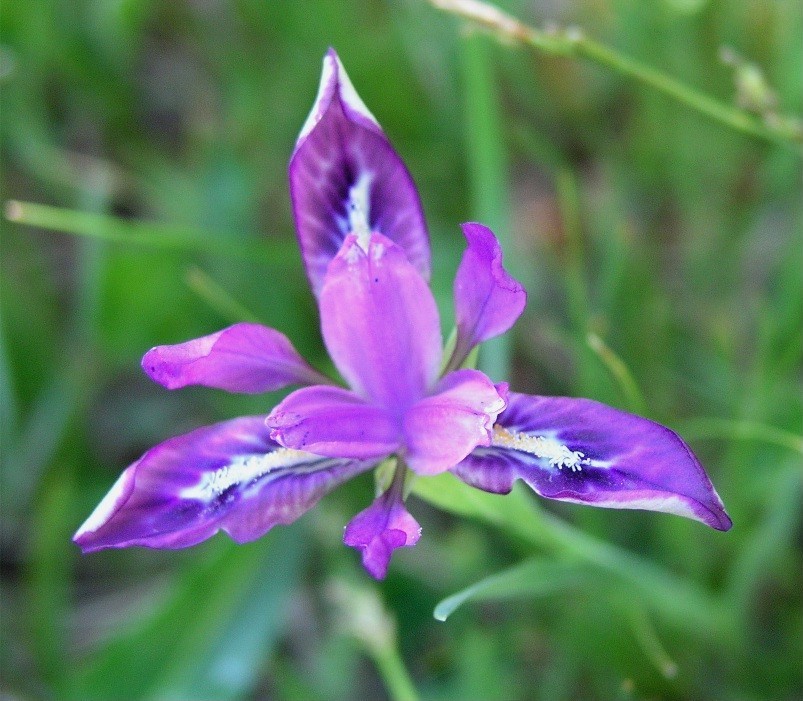
Iris goniocarpa
- Origin
- Asia
- Part used
- See detailed notebook
- Tradition
- Traditional ethnobotany
A discreet iris of the high Himalayan valleys, Iris goniocarpa grows in the rocky meadows and alpine pastures of Nepal, Bhutan, and neighboring regions of the Himalayas. Local folk traditions have given it a modest place, often linked to the broader uses attributed to iris rhizomes in Asian folk medicine. Its uses, however, remain poorly documented in accessible ethnobotanical literature, which calls for a cautious reading of this entry.
Traditional uses
Traditional use for digestive troubles
Like other Asian iris rhizomes, that of Iris goniocarpa was reportedly used locally, in small doses, to relieve digestive heaviness. This use is reported only fragmentarily in regional ethnobotanical sources.
Traditional application to the skin
The crushed rhizome was reportedly sometimes used as an external application on minor skin irritation, according to village practices passed down orally in certain Himalayan valleys.
Traditional relief of local pain
Certain mountain communities reportedly used a rhizome-based preparation as a poultice to soothe joint or muscle pain, a use shared with several wild iris species of the region.
What to know before use
Iris rhizomes contain compounds that can irritate mucous membranes and cause digestive trouble if internal use is poorly managed; the advice of a health professional or experienced herbalist is essential before any use. Use not recommended for pregnant or breastfeeding women, or young children, for lack of safety data. Do not confuse with other iris species, some of which are toxic, as precise botanical identification is essential before any harvesting. Due to the limited documentation available on this particular species, it is recommended to favor better-studied iris species for supervised traditional use.
The detailed notebook
- Prepared as a paste or decoction
- Traditional duration of use
- Known contraindications
- Related species and their uses
Where to find it
Partner herbalists — available with the detailed notebook.
Sources
PFAF