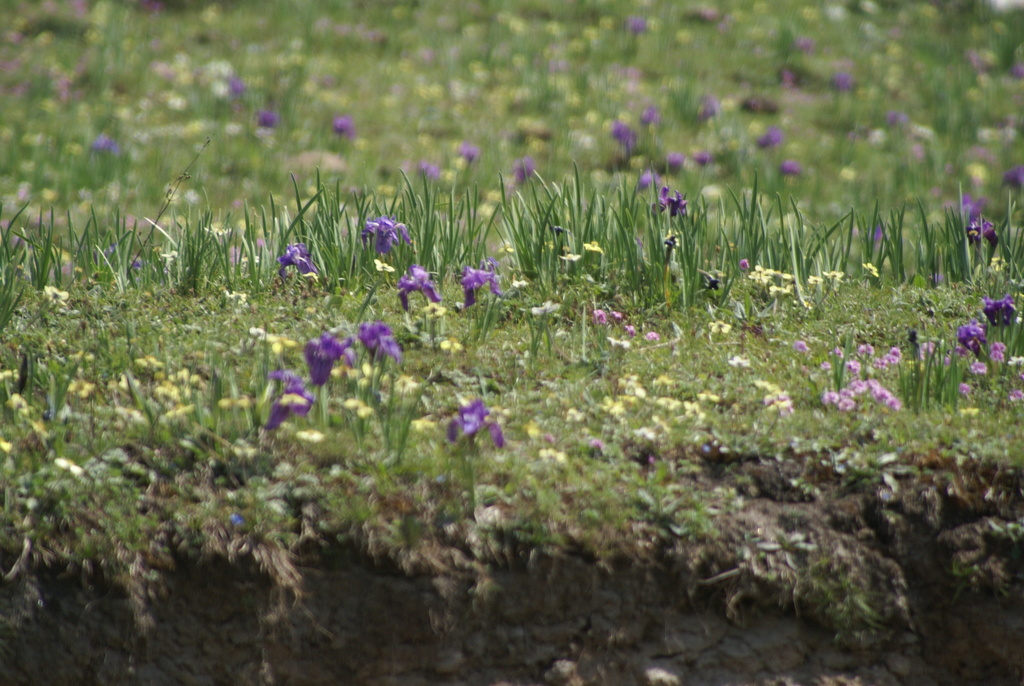
Iris kemaonensis
- Origin
- Asia
- Part used
- See detailed notebook
- Tradition
- Traditional ethnobotany
On the high foothills of the Himalayas, amid the rocky terrain and alpine pastures of Kumaon, Iris kemaonensis raises its purplish flowers as soon as the snow melts. Traditional healers of the Himalayan valleys attributed to it virtues for relieving stomach ailments and easing internal functions, passing this use down from generation to generation. Little known in the West, this small iris remains above all a plant of local tradition, documented only fragmentarily.
Traditional uses
Support for digestive functions
The dried rhizome was traditionally used in certain Himalayan pharmacopeia to soothe digestive discomfort and promote lighter digestion.
A traditional diuretic use
In the folk medicine of the Kumaon region, the plant was sometimes used to promote urinary elimination and support the kidneys.
A respiratory soother
A local use is reported for coughs and congestion, the plant being considered soothing for the throat and bronchi.
A tradition against stomach troubles
Certain ethnobotanical sources mention its use against stomach pain among mountain communities.
What to know before use
The genus Iris contains compounds (irisin, resins) that can irritate the digestive mucous membranes or cause gastrointestinal trouble at high doses: do not exceed occasional, moderate use. Use documented only very sparsely outside local oral tradition: caution requires consulting a health professional before any internal use. To be avoided in pregnant or breastfeeding women, as well as young children, for lack of safety data. Do not confuse with other ornamental Iris species, some parts of which (particularly the fresh rhizome) are reputed to be irritating or even toxic.
The detailed notebook
- Prepared as a paste or decoction
- Traditional duration of use
- Known contraindications
- Related species and their uses
Where to find it
Partner herbalists — available with the detailed notebook.
Sources
Wikipedia