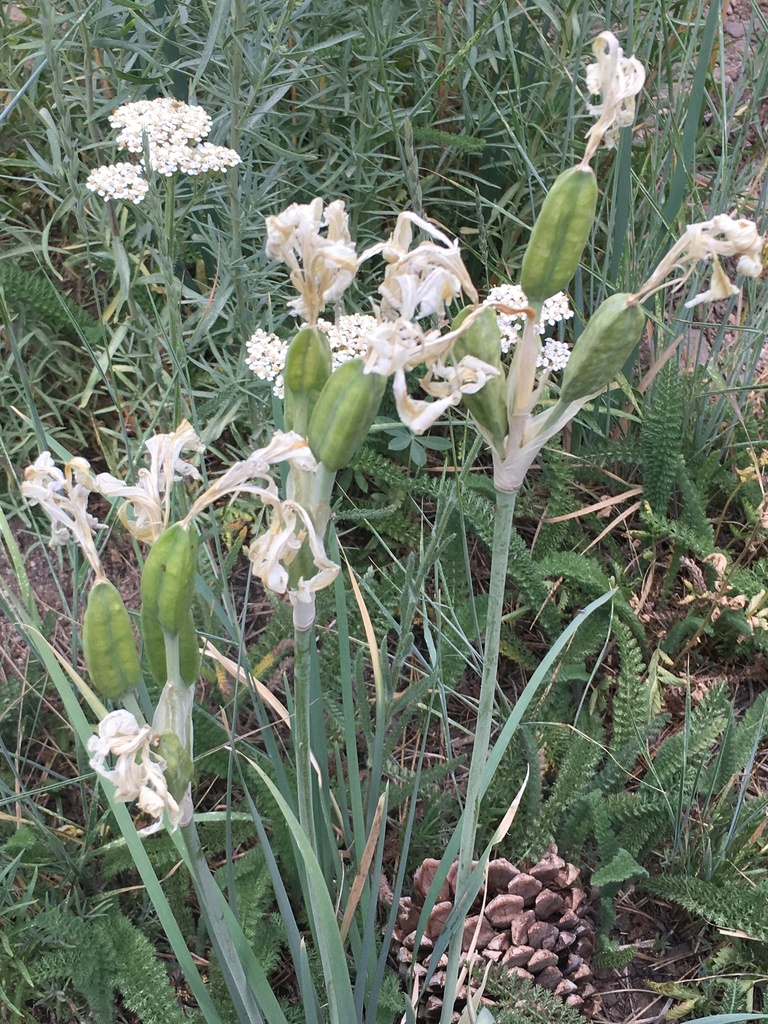
Iris missouriensis
- Origin
- North America
- Part used
- Root
- Tradition
- Traditional ethnobotany
On the high plateaus and wet prairies of the North American West, Iris missouriensis raises its blue-violet flowers as spring arrives. The Indigenous peoples of the Great Plains and the Intermountain Basin had long known the power of its root, reserved for careful, measured use. This wild iris is among the plants whose oral tradition has passed down its virtues as much as its dangers.
Traditional uses
A powerful traditional purgative
The dried root was used in very small amounts by certain Amerindian nations as a strong purgative, reserved for adults and administered with great restraint.
External application to wounds
A poultice or diluted decoction of crushed root was traditionally applied to wounds, insect bites, or skin infections for its reported cleansing properties.
Relief of toothache
A small piece of fresh root was sometimes chewed or applied locally to soothe toothache, a use attested among several Plains peoples.
A traditional use against coughing
Certain tribes used a highly diluted root preparation to relieve persistent coughing, always at a minimal dosage owing to the plant's toxicity.
Before you use it
A root toxic at high doses: it can cause vomiting, severe diarrhea, and significant digestive trouble; never exceed the minute quantities reported by tradition. Internal use is strongly discouraged without the advice of a health professional trained in medicinal plants. To be avoided in pregnant or breastfeeding women, as well as children. Do not confuse with other ornamental iris species, which are also toxic; wild harvesting requires certain identification.
The detailed notebook
- Prepared as a paste or decoction
- Traditional duration of use
- Known contraindications
- Related species and their uses
Where to find it
Partner herbalists — available with the detailed notebook.
Sources
PFAF, Wikipedia