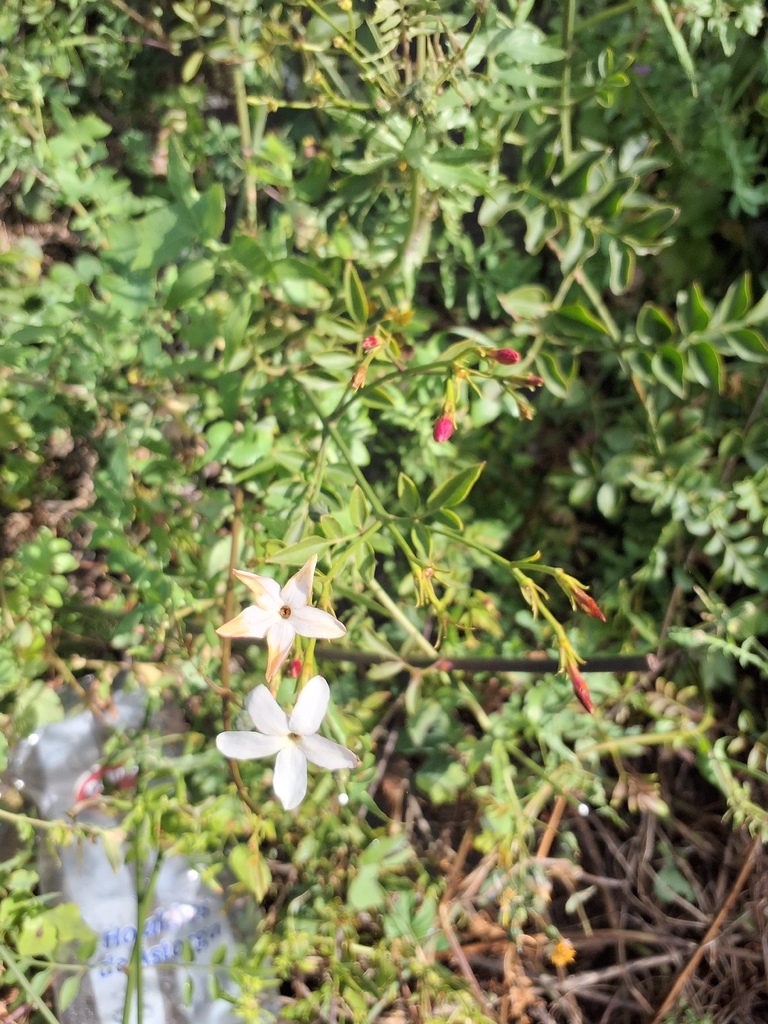
Jasminum officinale
- Origin
- Asia
- Part used
- See detailed notebook
- Tradition
- Traditional ethnobotany
Common jasmine, native to the Himalayan foothills and Asia, has for centuries perfumed gardens and summer nights. In Persian, Indian, and later Mediterranean traditions, its white, star-shaped flowers were as celebrated for their fragrance as they were gathered to make soothing oils, syrups, and infusions. A symbol of gentleness and allure, jasmine was also, in herbalists' notebooks, a flower of the heart and the calmed mind.
Traditional uses
A soothing evening flower
Traditionally infused to promote relaxation and help with falling asleep, jasmine has long been associated with evening herbal teas in Asia and the Middle East.
Care for dry skin
Oil infused with jasmine flowers was used as an application to soften and nourish dry or irritated skin, particularly in Indian cosmetic tradition.
A flower of comfort
Jasmine's fragrance was traditionally diffused or inhaled to lift the mood and soothe mild nervous tension.
A light digestive infusion
In China and South Asia, the dried flower was included in tea blends consumed after meals to promote calm digestion.
What to know before use
Avoid prolonged or high-dose internal use without professional advice, as safety data remain limited. Not recommended for pregnant or breastfeeding women, as a precaution. Perform a skin test before any application of jasmine oil, due to the risk of allergic sensitization. Seek the advice of a health professional if undergoing medication treatment.
The detailed notebook
- Prepared as a paste or decoction
- Traditional duration of use
- Known contraindications
- Related species and their uses
Where to find it
Partner herbalists — available with the detailed notebook.
Sources
PFAF, Wikipedia