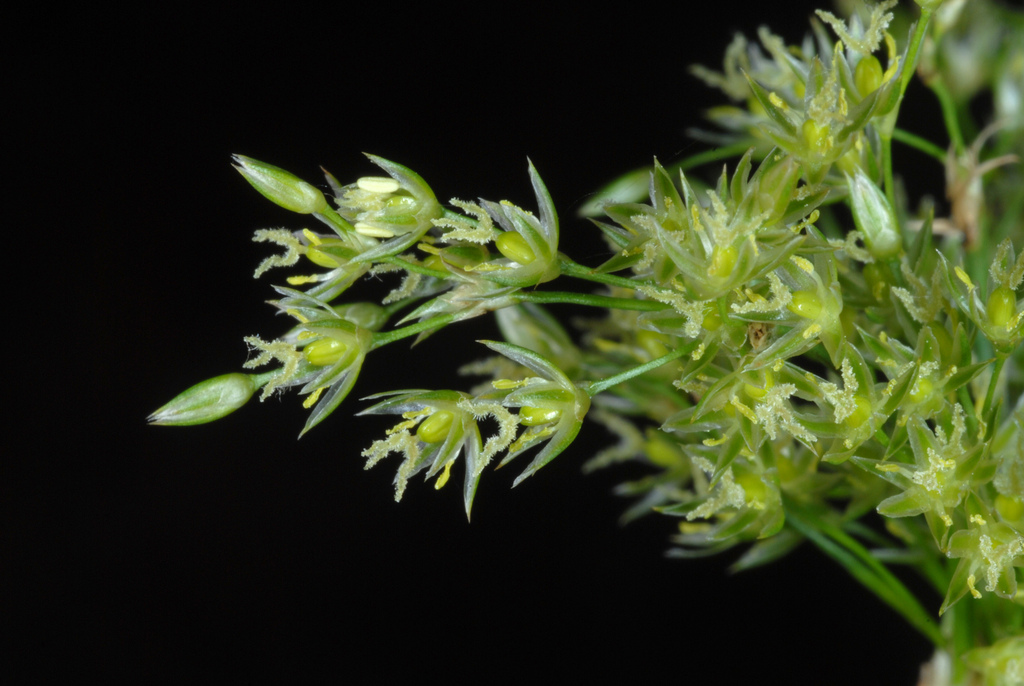
Juncus effusus
- Origin
- North America
- Part used
- See detailed notebook
- Tradition
- Traditional ethnobotany
Common rush, an unassuming inhabitant of wetlands and riverbanks, was long braided by the patient hands of country folk to light evening gatherings and edge baskets. Beneath its smooth, cylindrical stems lies a discreet tradition, more a craft than a medicinal one, passed down through generations in the marshy regions of North America.
Traditional uses
Pith used for rushlights
The white pith extracted from dried stems was traditionally used to make rudimentary candle wicks, dipped in animal fat, to light rural homes.
Weaving baskets and mats
The long, flexible stems were gathered to weave baskets, chairs, and mats, a use still practiced by some artisans continuing ancestral skills.
A reported traditional calming use
In certain folk traditions, the pith or root was sometimes mentioned as mildly calming, a use that remained marginal and poorly documented compared with other plants of the pharmacopoeia.
A mentioned traditional diuretic use
A few old sources of folk phytotherapy mention a diuretic use of the plant, though this practice never held a central place among recognized traditional uses.
Before you use it
Internal use is poorly documented and not recommended without the advice of a qualified health professional. To be avoided in pregnant or breastfeeding women, for lack of sufficient safety data. Do not give to young children. In case of doubt about the plant's identification or any medication interaction, consult a herbalist or doctor.
The detailed notebook
- Prepared as a paste or decoction
- Traditional duration of use
- Known contraindications
- Related species and their uses
Where to find it
Partner herbalists — available with the detailed notebook.
Sources
PFAF, Wikipedia