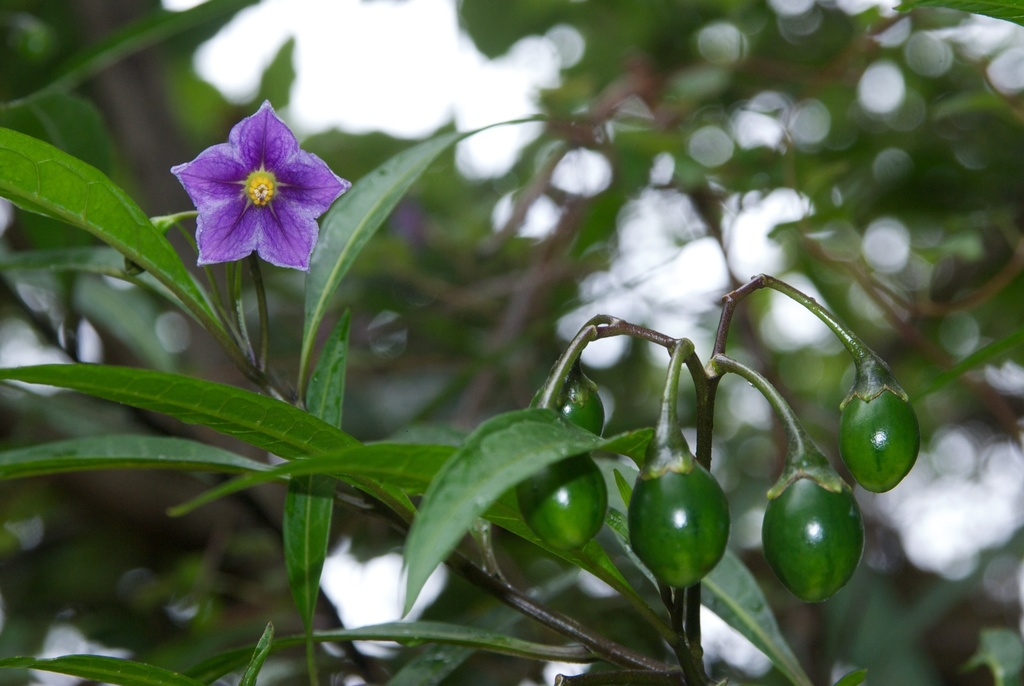
Kangaroo Apple
- Origin
- Oceania
- Part used
- Seeds/fruits
- Tradition
- Traditional ethnobotany
Beneath the canopies of Oceania, kangaroo apple unfurls its large lobed leaves and fruit that turns from deep green to orange-yellow at maturity. The Aboriginal peoples of Australia have long known this Solanum, whose ripe fruit was an occasional food resource, while the green fruit and other parts of the plant were kept at a distance, given their alkaloid content. It is this duality, between cautious food and potential poison, that runs through the whole history of this plant.
Traditional uses
Ripe fruit eaten with caution
Once fully ripe and orange in color, the fruit lost much of its bitterness and toxicity, and was then occasionally eaten by certain Aboriginal Australian communities as a foraged food.
A source of solasodine for pharmacopoeia
In the twentieth century, the seeds and green fruit of Solanum aviculare were cultivated on a large scale, notably in New Zealand and Russia, as an industrial raw material for extracting solasodine, a synthesis precursor for steroid hormones.
A reported local application
Occasional topical uses of the fruit or of preparations from the plant have been reported in certain folk traditions, but they remain poorly documented and cannot be recommended without supervision.
Recognizing stages of ripeness
Oral transmission emphasized above all the ability to distinguish the toxic green fruit from the ripe fruit, deemed edible in small amounts — a knowledge of recognition rather than a therapeutic use properly speaking.
Before you use it
The unripe fruit, leaves, and stems contain glycoalkaloids (solasonine, solamargine) that may cause severe digestive and neurological trouble if ingested. This plant is discouraged for pregnant or breastfeeding women, and for children, owing to its alkaloid profile and its history of use linked to solasodine, a hormone precursor. Never eat the fruit before full ripeness, and only after certain identification by an experienced person. The advice of a health professional or qualified botanist is essential before any use, as this plant is not intended for everyday household use.
The detailed notebook
- Prepared as a paste or decoction
- Traditional duration of use
- Known contraindications
- Related species and their uses
Where to find it
Partner herbalists — available with the detailed notebook.
Sources
PFAF, Wikipedia