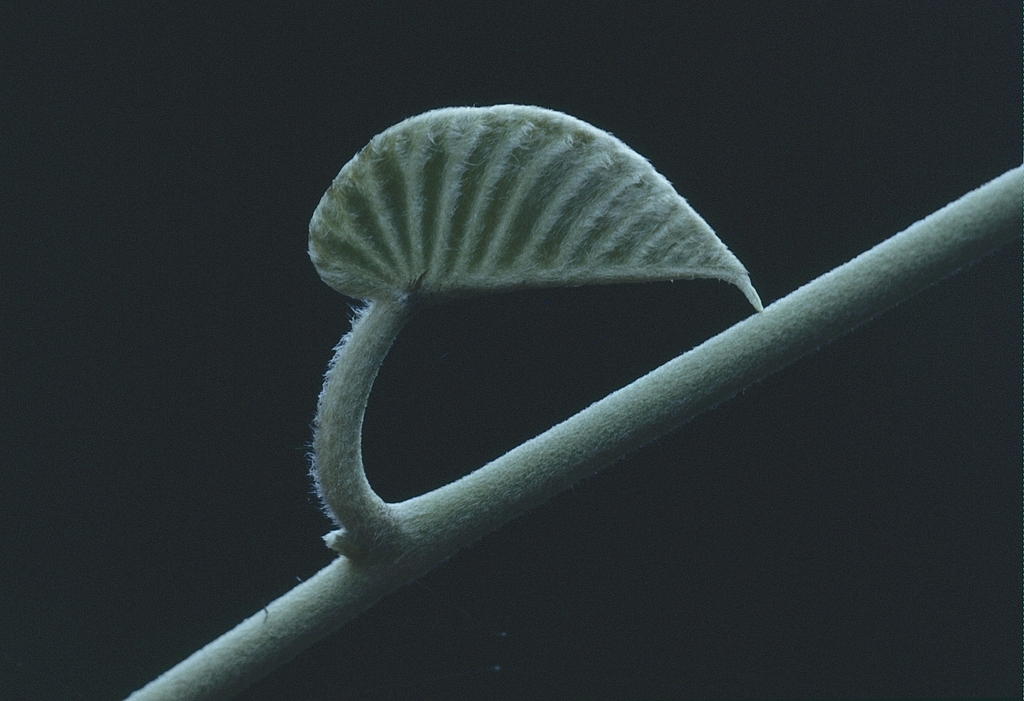
Hawaiian Baby Woodrose
- Origin
- Asia
- Part used
- Seeds / fruit
- Tradition
- Traditional ethnobotany
Native to the forests and hills of India, the Hawaiian baby woodrose readily climbs along trees, unfurling broad leaves with a silvery underside that gives it its French name, "silver vine." Its seeds, known in certain Ayurvedic traditions as vidhara, have held a particular place among plant substances considered powerful and to be handled with great discernment. This entry is limited to reporting what history and ethnobotany have documented about it, without endorsing it.
Traditional uses
A fortifying, longevity plant
In Ayurvedic pharmacopeia, vidhara seeds were sometimes classified among the substances known as rasayana, reputed to support general vitality over the long term.
A substance with a visionary aim
Certain folk traditions of India have reported an occasional use of the seeds in practices seeking to alter the state of consciousness, due to compounds related to those of other psychoactive morning glories.
A reputation as a nervine plant
Some ethnobotanical writings mention a traditional use to soothe passing nervousness, always at a very low dose and on an occasional basis.
A traditional external application
The plant, its leaves or crushed seeds, is said to have been used locally as an external preparation in certain regions, particularly on minor skin irritation.
What to know before use
The seeds contain ergoline-type alkaloids, related to those of LSA, whose effects on the body are powerful, unpredictable, and can include nausea, dizziness, confusion, or cardiovascular trouble. This plant is formally not recommended for pregnant or breastfeeding women, children, or anyone undergoing medication treatment (particularly psychiatric or cardiovascular). The legal status of this plant varies by country; it is advisable to check the regulations in force before any possession or use. A reported traditional use is in no way a guarantee of safety: any use of this plant should be preceded by advice from a qualified health professional.
The detailed notebook
- Prepared as a paste or decoction
- Traditional duration of use
- Known contraindications
- Related species and their uses
Where to find it
Partner herbalists — available with the detailed notebook.
Sources
PFAF, Wikipedia