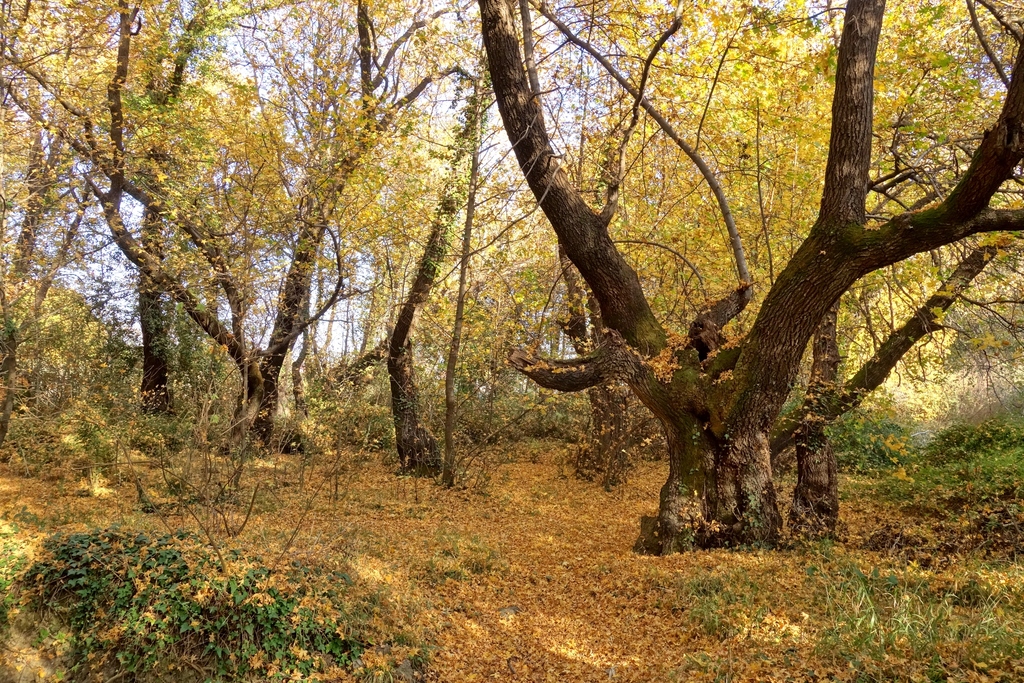
Liquidambar orientalis
- Origin
- Europe
- Part used
- See detailed notebook
- Tradition
- Traditional ethnobotany
Liquidambar orientalis, a tree with a fragrant trunk native to the shores of the eastern Mediterranean, was once celebrated for its aromatic resin known as storax. The ancients gathered it with care, regarding it as a precious balm from the East, blending soothing properties with ritual uses in incense and perfumery.
Traditional uses
Application on irritated skin
Storax resin was traditionally applied externally, mixed with other balms, to soothe irritated skin or minor skin lesions.
Fumigation and inhalation
Burned as a fumigation or used by inhalation, the resin was traditionally used to clear the airways during colds.
Ancient incense and perfumes
Storax has gone into sacred incense and perfumes since antiquity, particularly in the religious traditions of the Mediterranean basin and the Near East.
Local antiseptic use
Some herbalist traditions report the use of storax balm as a local antiseptic for minor wounds, applied as a light poultice.
Before you use it
Storax resin can cause allergic reactions or skin sensitization in some people; a patch test on a small area of skin is recommended before any application. Internal use is not reliably documented and is not recommended without the advice of a health professional. To be avoided in pregnant or breastfeeding women, as well as young children, in the absence of sufficient safety data. Do not use on already damaged or very sensitive skin without prior medical advice.
The detailed notebook
- Prepared as a paste or decoction
- Traditional duration of use
- Known contraindications
- Related species and their uses
Where to find it
Partner herbalists — available with the detailed notebook.
Sources
PFAF