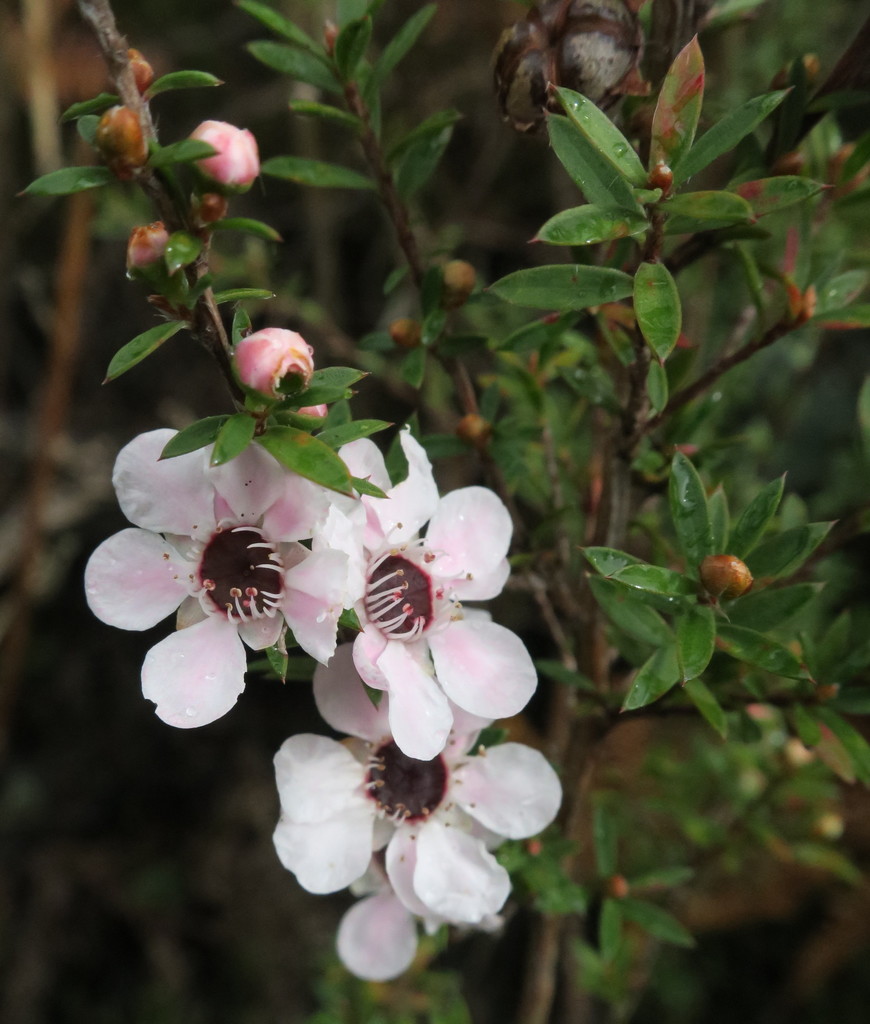
Manuka
- Origin
- Oceania
- Part used
- See detailed notebook
- Tradition
- Traditional ethnobotany
A shrub of New Zealand's moors and hills, manuka has accompanied the Maori people for generations, who drew from it remedies for the skin, the airways, and everyday ailments. Its honey, today renowned well beyond Oceania, is only the best-known part of a much broader traditional use of this tree.
Traditional uses
Traditional care for minor wounds
The bark and infused leaves, or manuka honey, were traditionally applied to the skin to accompany the healing of small wounds and skin irritations.
Inhalation for the airways
Fresh leaves, crushed or infused as a steam, were used by the Maori to clear the airways during colds and feverish states.
A soothing infusion for the stomach
A light decoction of leaves and bark was traditionally drunk to soothe minor digestive troubles and stomach pain.
A calming use of the foliage
The foliage, as a gentle infusion, traditionally accompanied moments of nervous fatigue or tension, for an overall soothing effect.
Before you use it
Manuka honey, though generally mild, should be avoided in infants under one year of age, like any honey. In case of a deep or infected wound, an extensive burn, or a persistent respiratory symptom, consult a health professional rather than relying solely on traditional use. Concentrated preparations made from bark or leaves have not been the subject of thorough studies on their long-term safety; occasional, moderate use is recommended. Check for the absence of a bee-product allergy before any skin application of manuka honey.
The detailed notebook
- Prepared as a paste or decoction
- Traditional duration of use
- Known contraindications
- Related species and their uses
Where to find it
Partner herbalists — available with the detailed notebook.
Sources
PFAF, PubMed